Review: Should be required reading in every history class
This review of Dying Hard was submitted on February 26, 2025 on Amazon.com. The reviewer titled it: “Should be required reading in every history class.”
As an Infantry combat veteran of the Vietnam War and the Gulf War, I can attest that Dying Hard is the most realistic portrayal of infantry combat I have ever read. The facts and easy writing are obviously the keys to the book’s accuracy and smooth flow, and the photographs and maps are excellent as well. 10 large well-done maps help you follow the unit’s progress and each is located close to the text it illustrates so you don’t have to page back and forth.
Of the 95 photographs, 5 are in color; 14 are combat shots (bazooka, machineguns, mortars, patrolling, etc.) 23 are from the National Archives (NARA) and I have only seen one that was previously published- you are going to view a great deal for the first time. Others show general infantry life and includes one of Paddy Flint, George Patton awarding a Silver Star to the 39th Infantry Regiment commander, a couple showing graves, one (from the archives) showing a piece of a mattress cover used to bury a sergeant in Company B (we ran out of wooden caskets), and a wartime shot of the famous Town Pump bar where hundreds of soldiers from the 9th and 82nd divisions battled it out in a bar fight.
But the heart of the photos are 56 individual- and one group-shot with 9 more, of identified soldiers in Company B. Combined with detailed background of many of the soldiers, you are going to feel that you actually know many of them personally. That is the beauty of Dying Hard. It puts you there.
This is a typical description in the School of the Soldier section at the end of most chapters.
Sleep – For many an infantryman he is always tired. Really tired; in fact, after the war, a Hürtgen veteran stated: “I saw men die under artillery fire because they were so tired that they were only able to scratch the outline of a foxhole in the dirt.” Move here; move there. Carry this; carry that; now carry some more. Dig a foxhole all day; now go out on patrol tonight. Then go back in your foxhole and spend half of the rest of the night awake on security. And tomorrow? Do it all over again.
So, soldiers learn how to sleep in conditions that seem impossible to others. They are ingenious in staying dry enough to fall asleep, when water is dripping from overhanging trees, or oozing up from the wet ground below. Loud noises, causing civilians to wake up startled, are seemingly ignored by soldiers apparently slumbering in infant bliss. Once you get used to a few mortar rounds falling in your general vicinity, you can get used to almost anything. But don’t give in to the urge to sleep in captured bunkers; the straw inside is full of fleas and lice.
As to sleeping surfaces, GIs appear can almost levitate to be comfortable – curling around large rocks, avoiding sharp jutting roots, and steering clear of ground that might appear dry now, but will be damp by morning. Louis Benoist wrote about sleep: “You know you have seen pictures of infantrymen sleeping wherever they hit the ground. It can be done – I do it. After so long a time you have to get used to it. Not so bad when you do. After your hips get tough the ground gets pretty soft.” Some soldiers even claim they can slip into a sleeplike trance while walking – trudging one foot ahead of the other in thousands of repetitions – all the while staying the proper distance behind the trooper in front of him.
After the war, former combat soldiers – now fathers and grandfathers – can seemingly take a short catnap anywhere: the sofa; the ballgame; outside in the backyard, at the beach; listening to the wife, all while the kids and grandkids are running around screaming, crashing into furniture, playing tag, lighting fireworks, and causing general auditory mayhem.
Dying Hard is not just another war book. It is also about how Americans lived back in the World War II years. For example, you’ll read how soldiers back then scrounged and liberated alcohol, because, “No one is more creative than American service members at obtaining booze. They drink to celebrate; they drink to reduce stress; they drink to relieve boredom; they drink to avoid facing the images of terror slinking through the dark recesses of their minds; and they drink just to get gassed.”
Even General George Patton got in the act, writing home to his wife about a special Old Fashioned cocktail, that he had helped create. If he made it with his favorite bourbon, it went as follows: I.W. Harper’s Kentucky Straight Bourbon Whiskey; “melt up a teaspoon of orange marmalade in a glass; add whiskey and stir; then add ice and drink; it is swell. You put a little water in first to melt the marmalade it [doesn’t] melt well in whiskey.”
You’ll read about the boxing fight for the heavy-weight championship of the world between American Joe Louis and German Max Schmeling. And how that was so important in society. 70 million people listened to the fight on radio in the US, as did a further 100 million around the world. Because there was no TV back then. You had to visualize in your mind what was going on.
And you’ll see how America’s most well-known Big Band leader, Glenn Miller, ended up in the US Army instead of the US Navy.
Then there’s baseball and its impact on America in this era. And Company B got into that act as well, when prior to the war, the future Company B first sergeant, Joe Gravino, signed a Major League contract to play for the St. Louis Cardinals — not a farm team, but on the big club under Billy Southworth in St. Louis!
Just another war book? Not hardly. But you will read about how Bob Hope got his start, and how his USO show wasn’t just entertainment — although that was really important. But more significantly, Bob Hope passed on what he sees overseas to the loved ones of these soldiers – who viewed his visits as vicarious travels they cannot make: “I was there. I saw your sons and your husbands, your brothers, and your sweethearts. I saw how they worked, played, fought, and lived. I saw some of them die. I saw more courage, more good humor in the face of discomfort, more love in an era of hate and more devotion to duty than could exist under tyranny.”
The following review comes from quite a remarkable US Army Infantry officer:
“I just finished Dying Hard. Wow! What a great read. You have captured the visceral feel of what the charter members of the Greatest Generation were so silent about. Your research is evident on every page and it makes the reading interesting, informative, and enjoyable. I do my reading in the last hour and a half every night. I found myself looking forward to that time during the day and in a few cases, like today, I cheated and read during the day.
I hope somehow that the children and descendants of the solders you write about know about the book. What joy and pride it would / will bring to them when they read it. I know the effort it must have taken to get the firsthand accounts and the diligence it took in your research to mine such great information and personal detail.
Your history of the company during the Battle of the Bulge gave the reader a great feel for the frustration and challenges leaders at the squad, platoon, and company level had to endure. The constant rotation of soldiers in and out of the company must have been frustrating and disheartening to leaders at every level. Reading Jack Dunlap’s detailed daily reports lays out exactly what junior leaders had to overcome to get the even simplest things done.
I recently read, Antony Beevor’s Ardennes 1944. Dying Hard gives a much better view of what that battle was like for the common soldier, not just the fighting but the challenges of everyday life as a grunt. Dying Hard introduced me to Paddy Flint. What a hero and great leader who understood how to inspire his entire unit with his lead from the front and deeds not words leadership.
I very much enjoyed the School of the Solder. It brought back many memories. This 30 veteran learned some things I did not know about the gear that I carried for three decades. It’s funny, my Dad gave the same advice about not playing cards with Sergeants. I caught myself several times wiping a tear from my eye as I read about the great soldiers lives during and after the war. They truly were the Greatest Generation and the Silent Generation.
I am glad that you have written a book about one of the many units that were not elite or famous. These were the yeoman units that really won the war but unfortunately got very little press, praise, or recognition. I can’t tell you how much I enjoyed Dying Hard. You have helped me decide on what to buy my son for Christmas. The research is exceptional, and the writing is wonderful. It stands among the very best WWII reads I have had.”
Below are a few captions that accompany some of the excellent photos in the book, so you know what to expect!
The Town Pump – Fayetteville 1942. The fights, brawls, and near-riots here involving soldiers of the 9th Infantry and 82nd Airborne proved that the US Army had found its “hard core of scrappers.” Note 9th Infantry patch on bottom center soldier.
Company B sprinted across the Remagen bridge under heavy fire on March 10, 1945. “When we got to the end we found a captain and his driver in a jeep burning like an inferno, a direct hit.”
When the Army issued a few beers to soldiers off the line, such as to the 9th Infantry in November 1944, it was just bowing to the inevitable, because no one is more creative than American service members at obtaining booze.
Private Snafu – goofy, ignorant, and obnoxious; star of 25 episodes of short US War Department black and white films instructing soldiers what not to do. One of the best was “Episode 5 – The Infantry Blues.” Most were written by Theodor Geisel, later author of children’s books under the pen name of Dr. Seuss.
Colonel Harry “Paddy” Flint outside his headquarters, England in 1944. The 39th Infantry took on his fighting spirit and trademark AAAO. The black handkerchief? Paddy explained, “It’s the pirate in me!”
Front gate Merode Castle. Bouncing Betty landmines, barbed wire, machine guns and snipers could not prevent First Battalion from storming the castle.
39th Infantry medics transfer wounded from sled to jeep and Weasel near Höfen January 31, 1945.
First photo of American forces liberating Stalag VI G April 13, 1945. Unit chaplains organize a religious service for the prisoners.
Major General Joseph Lawton “Lightning Joe” Collins during Merode attack. When the corps commander is watching your attack, you know you’ll get plenty of supporting artillery.
An initial review from an “old” US Army Infantry colonel after reading Dying Hard:
I just finished Dying Hard. Wow! What a great read. You have captured the visceral feel of what the charter members of the Greatest Generation were so silent about. You research is evident on every page and it makes the reading interesting, informative, and enjoyable. I do my reading in the last hour and a half every night. I found myself looking forward to that time during the day and in a few cases, like today, I cheated and read during the day.
I hope somehow that the children and descendants of the solders you write about know about the book. What joy and pride it would / will bring to them when they read it. I know the effort it must have taken to get the firsthand accounts and the diligence it took in your research to mine such great information and personal detail.
Your history of the company during the Battle of the Bulge gave the reader a great feel for the frustration and challenges leaders at the squad, platoon, and company level had to endure. The constant rotation of soldiers in and out of the company must have been frustrating and disheartening to leaders at every level. Reading Jack Dunlap’s detailed daily reports lays out exactly what junior leaders had to overcome to get the even simplest things done.
Dying Hard gives a much better view of what that battle was like for the common soldier, not just the fighting but the challenges of everyday life as a grunt. Dying Hard [also] introduced me to Paddy Flint. What a hero and great leader who understood how to inspire his entire unit with his lead from the front and deeds not words leadership. I want to learn more about him. His letter to Gen. Bradley was prophetic.
I very much enjoyed the School of the Soldier. It brought back many memories. This 30 veteran learned some things I did not know about the gear that I carried for three decades. It’s funny, my Dad gave the same advice about not playing cards with Sergeants. I caught myself several times wiping a tear from my eye as I read about the great soldiers lives during and after the war. They truly were the Greatest Generation and the Silent Generation.
One of the big surprises to me was the number of times solders were wounded, many 2-3 times. Some used the wound to get out of the war, but the number who just wanted to get back to B company is a testament to the kind of men we bred back then.
I am glad that you have written a book about one of the many units that were not elite or famous. These were the yeoman units that really won the war but unfortunately got very little press, praise, or recognition. I particularly enjoyed following your father’s story line in the book. His story is fascinating. To survive the combat and then the Stalag was quite an accomplishment.
I can’t tell you how much I enjoyed Dying Hard. You have helped me decide on what to buy my son for Christmas. I have and will recommend it to all my friends as a must read.
Dying Hard stands among the very best WWII reads I have had. The research is exceptional, and the writing is wonderful.
The following maps are found in the book:
Map 1: 39th Regiment Landings, Company B, Algeria, November 8, 1942
Map 2: 39th Infantry Regiment, Company B, Northern Tunisia, April 1943
Map 3: Company B, 39th Infantry Regiment, Sicily 1943
Map 4: Panzer Lehr Division Attack of Company B, Le Dézert, Normandy, July 1944
Map 5: 9th Infantry Division, Company B, Attack to Germeter, Hürtgen Forest
Map 6: Company B at Germeter, Hürtgen Forest, October 4 to 25, 1944
Map 7: Company B Defense of Elsenborn Ridge, Hohes Venn, Belgium
Map 8: Company B Attack of Siegfried Line Kalterherberg, Germany
Map 9: 9th Infantry Division, Company B Crosses Remagen Bridge, March 10, 1945
Map 10: Significant Company B Locations, Late 1944-45
The American Army
Foreword – The American Soldier
Introduction – “Things Ain’t What They Used To Be”
Preface/Acknowledgments
Chapter 1 – Long Ago and Far Away, Ft. Bragg
Includes: Marksmanship Training; The Letter; Goldbricking; Mess Halls
Chapter 2 – The Old Reliables, Algeria, Tunisia, Sicily & England
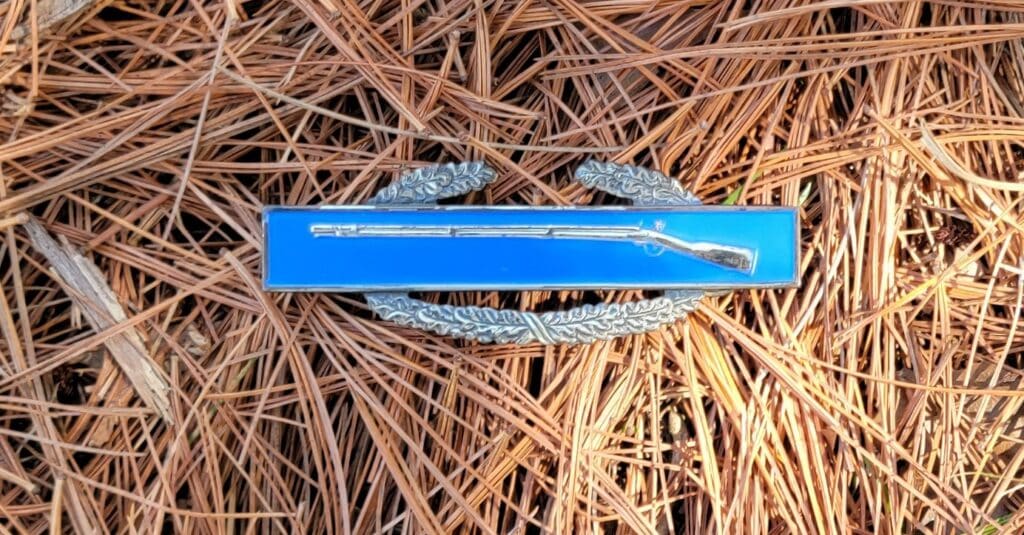
Includes: Your Helmet; Private Snafu; Combat Fatigue; Mustangs; Officers & Sergeants; Combat Infantryman Badge; Bob Hope; The Army Way; Wounds
Chapter 3 – The Americans are coming! Across France & Belgium
Includes: Medics; Bazooka; Hooch; Sleep; Krauts, Jerries, Huns, Heinies & Fritz; IV-Fs & Jody; Tiger Tank; Guardian Angel
Chapter 4 – The Hell of the Hürtgen
Includes: May Hosiery Mill; Navigating through the Woods; C-Rations & K-Rations; German Discipline; M1s & BARs; Mortars; Maps; Pneumonia; Sounds
Chapter 5 – The Hohes Venn, Elsenborn Ridge (1), Merode Castle
Includes: Trench Foot; Unit Call Signs; Latrines; Gas Masks; Deuce and a Half; Foxholes; Booby Traps; The Uniform; Foraging, Scrounging & Looting; Radios; Infantry Tactics; Penicillin; Malmedy
Chapter 6 – Battle of the Bulge, Elsenborn Ridge (2), Kalterherberg
Includes: Glenn Miller; Hey Joe. Whaddya know?; Spam; Continental Stockade; Barbed Wire; Fruitcake; Victory Mail
Chapter 7 – Mac’s War Stalag VI G
Includes: Dog Tags; Missing in Action; Typhus
Chapter 8 – Dying a Man at a Time
Includes: Repple Depots; Silver Star; Snipers; Beware Traitor…the Werwolf Watches
Chapter 9 – “Show Me the Way to Go Home”
Includes: Operation Downfall
Conclusion – “I won’t forget the men who died, who gave that right to me”
Includes: where every soldier who died in the final year of the war is buried
Epilogue – The Silent Generation
Includes: postwar information on many of the soldiers who survived
Appendix: Company B Personnel
Includes: name, service number, rank, duty positions, medals received, dates became casualties
Endnotes & Bibliography
Dying Hard: Company B, 39th Infantry Regiment, 9th US Infantry Division in WWII has arrived and folks are already reading it. You can go the publisher’s website, https://schifferbooks.com/products/dying-hard or go to Amazon.
342 pages; 10 maps of Company B during the war, emphasis on 1944-45. 16 pages photos, including composites showing 45 soldiers in the company. Many others are combat photos, many never in print before. Book is everything I hoped for. I think you’ll love it.
But why should you actually READ it?
Because it puts YOU in Company B. You’ll think you were there. North Africa, Sicily, Normandy, Hürtgen Forest, Merode Castle, Battle of the Bulge, Remagen Bridge, and a little hellhole called Stalag VI G.
Secondly, you will fit right in with us in Company B. How do we know?
When something in life knocks you down, you get back up, wipe the blood off your nose, and say: “Is that all you’ve got?” you’re in Company B. If people told you that you were too small, too slow, too poor, or too anything, and you proved them all wrong, you’re in Company B.
Love dogs? In 1942, a young soldier found a stray dog in the Aleutian Islands and took care of him. Two years later, he put Buff in his duffel bag, climbed aboard a troopship with Buff in a duffel bag and sailed to Europe and Company B, where Buff was our mascot and pulled guard duty. So if you love dogs, you’re in Company B too.
Rise and shine, grab your helmet, and make sure your M1 Rifle is loaded. Because we’re all going back to the line.