

Ferdinand Schörner
Oldwig von Natzmer, Army Major General, born June 29, 1904 in Liegnitz, chief of staff of Army Group Center, Army Group North and Army Group Courland, winner of the Knight’s Cross of the Iron Cross, survived the war, co-author The Anvil of War: German Generalship on the Eastern Front, died on April 1, 1980 at Hannover, said of Field Marshal Ferdinand Schörner: “The legendary Field Marshal Schörner, whose thick-set figure immediately attracted attention, spread fear and alarm by his blustering and stern appearance, no matter where he turned up.” After serving ten years as a prisoner of war in Russia, Schörner returned to Germany in 1955, but was arrested and charged with the murder of German soldiers during the last months of the war. A Munich court found him guilty of manslaughter in 1957 and sentenced to four and a half years imprisonment. Ferdinand Schörner died in Munich on July 6, 1973. (2000 Quotations from Hitler’s Thousand Year Reich)
**********
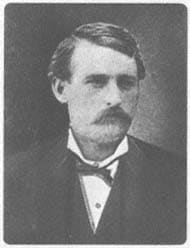
George Herendeen
Wednesday, April 1, 1874 (Smith Creek). Sunrise occurred at 5:54 a.m. At about this time, according to George Herendeen and later recorded by Walter Mason Camp, the men started to leave behind bread as they left each campsite. The bread had been poisoned with strychnine. The trick did not sit well with all the men. Charles Avery was one of those who did not like the tactic and later wrote: “We got so mad at those Indians that we poisoned the pemmican and left it for them to eat. That was, no doubt, a mean trick and should not have been done.” It rained and snowed during the day. No warriors were encountered. The expedition moved south and camped at Smith Creek. Sunset was at 6:43 p.m. (Sitting Bull, Crazy Horse, Gold and Guns: The 1874 Yellowstone Wagon Road and Prospecting Expedition and the Battle of Lodge Grass Creek)