
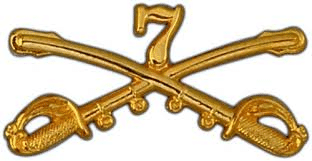
Seventh Cavalry insignia
Sergeant Patrick Carey, Company M, 7th Cavalry was born in Tipperary, Ireland on April 14, 1828. A bachelor, Carey enlisted on September 14, 1866 in Company I of the 36th Infantry Regiment; enlistment records show he was 5’7½” tall, with gray eyes, gray hair with a light complexion. After completing his initial enlistment, Carey, who was nicknamed “Patsy,” enlisted on March 4, 1870 with Company M of the 7th Cavalry at Fort Leavenworth. He completed this enlistment as well and re-enlisted in Company M on March 22, 1875. He was promoted to corporal on August 15, 1873 and to sergeant on December 10, 1874.
Carey was close with First Sergeant Ryan; it had been Ryan for whom he had called when in trouble during the opening stages of the company riot in March. Private Carey re-enlisted on April 19, 1880 in Troop L of the 7th Cavalry and re-enlisted again on April 19, 1885 in Troop E of the 7th Cavalry, but was never promoted past private again. On July 1, 1887 Carey was discharged for disability with chronic rheumatism. He later received a monthly pension of eight dollars for eye disease.
Late in life “Patsy” Carey resided at the U.S. Soldiers’ Home in Washington, D.C.; he died at Barnes Hospital there on October 3, 1893 of senile debility and exhaustion. Sergeant Patrick Carey is buried at the Soldiers’ Home National Cemetery in Section K, in Grave 6659. (Custer’s Best: The Story of Company M, 7th Cavalry at the Little Bighorn)
**********

Master Sergeant John C. Woods
In April 1948, Operation Sandstone began on Eniwetok consisting of atomic bomb tests on April 14, April 30 and May 14 of that year. Master Sergeant John C. Woods would arrive at Eniwetok about two years later for his final assignment in the Army. (American Hangman: MSgt. John C. Woods, The United States Army’s Notorious Executioner in World War II and Nürnberg)