
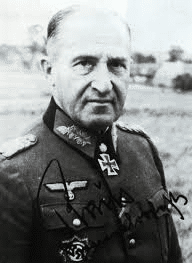
Erhard Raus
Erhard Raus, Army Colonel General, born January 8, 1889 in Wolframitz (Moravia), Austria, commander of the 6th Panzer Division, commander of the 1st, 3rd and 4th Panzer Armies, winner of the Knight’s Cross of the Iron Cross with Oak Leaves, died on April 3, 1956 in Bad Gastein, said of the German High Command: “The High Command has lost all sense of time, space and relative strengths, and has so shackled the field commanders that they go into battle with their hands tied behind their backs and a halter around their necks, for they have to carry out the orders under pain of death; and when the execution of these orders ends in failure, they are thrown out in disgrace and condemned as traitors.” (2000 Quotations from Hitler’s Thousand Year Reich)
**********
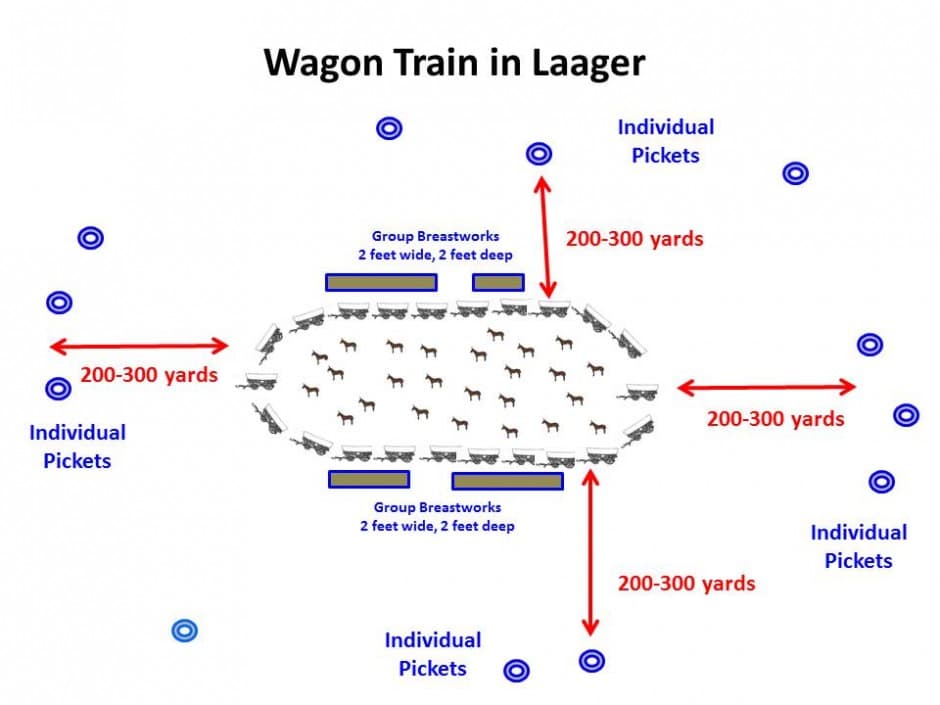
Friday, April 3, 1874 (Entered the Rosebud Valley/Rosebud Creek). Sunrise occurred at 5:51 a.m. From a high ridge some 800 yards from the campsite, a warrior fired at the men, but return fire drove him away; later recollections indicated that up to thirteen warriors were shadowing the wagon train. Buck Buchanan, Yank Evarts and Harry Wilson again made a scout around the area before the livestock was released from the corral to graze. Apparently the trio was becoming a good team together. The frontiersmen made coffee and ate breakfast. The expedition departed camp about 8:00 a.m., heading for the divide between Sheep Creek and Cottonwood Creek, and entered the valley of the Rosebud at a point thirty-two miles south of the Yellowstone River in the afternoon.
The wagon train crossed several small dry creek beds with cottonwood and ash timber in them. The men pulled up on the first bench land east of the Rosebud Creek and began making camp; they had made nine miles that day. The bench land was fifteen feet above the valley floor, some 400 yards east of the creek. During the movement, the men saw evidence of an Indian campsite of up to 200 lodges, although Hugh Hoppe thought it could have been upward of 300 to 500 lodges. The men dug rifle pits around the outside of the corral for defense against a possible night attack. Sunset was at 6:45 p.m. Back at Bozeman, the Avant Courier on this day wrote that no further contact had been made with the expedition and no messages had been received from it. (Sitting Bull, Crazy Horse, Gold and Guns: The 1874 Yellowstone Wagon Road and Prospecting Expedition and the Battle of Lodge Grass Creek)