

Sachsenburg concentration camp (formerly Tautenhahn Spinning Company)
Franz Jacob, SS-Obersturmbannführer, was born in Zerbst on July 23, 1913. He served at the Sachsenburg concentration camp from 1934 to 1935 and at the headquarters for concentration camps at Oranienburg in 1939. He later served in the 3rd SS Division “Totenkopf” from 1939 to 1944 and the 9th SS Division “Hohenstaufen” the following year. An artillery battalion commander, he was wounded in action and received the German Cross in Gold. (The Camp Men: The SS Officers Who Ran the Nazi Concentration Camp System)
**********
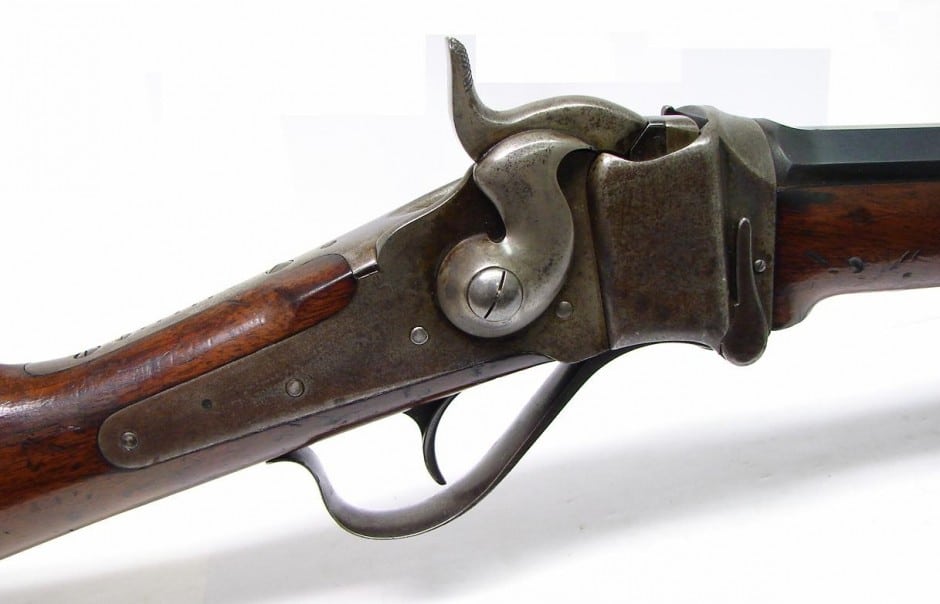
Sharps Rifle. Jack Bean used one in the longest shot in the West against a single adversary during the Yellowstone Wagon Road and Prospecting Expedition in April 1874 at the Battle of Lodge Grass Creek
After serving in the Great Sioux War of 1876 in the Montana Column, in the summer of 1877 Jack Bean hired on with the army looking for Nez Perce warriors along the Madison River and in Yellowstone Park as a scout with George Herendeen, making $5 a day. That fall he went to Yellowstone Park as a hunting guide for former Confederate Army officer Colonel William D. Pickett (Pickett was one of the earliest members of the Boone and Crockett Club.) Bean was present at the celebration in 1883 to commemorate the arrival of the Northern Pacific Railroad to Bozeman and honor the members of the 1874 expedition. He later married Dora Francis Erskine. In 1889, Bean lived on Rocky Creek, east of Bozeman; his homestead was 160 acres. Jack Bean guided hunters in Montana until about 1900, when he went to San Jose, California. There he started the San Jose Rubber Works with his sons. Jack Bean died on July 23, 1923 in San Jose, California and is buried in the Old Section of the Oakhill Cemetery in that city. (Sitting Bull, Crazy Horse, Gold and Guns: The 1874 Yellowstone Wagon Road and Prospecting Expedition and the Battle of Lodge Grass Creek)