French MacLean

About French MacLean

This author has not yet filled in any details.
So far French MacLean has created 279 blog entries.

Chełmno/Kulmhof

Chełmno was a hybrid extermination camp whose mechanism for death was a special commando, Sonderkommando Lange, of mobile toxic gas vans in which the victims were killed. These vans then dumped the bodies in mass graves in a nearby forest, the Rzuchów Forest. The location, referred to by the Germans as the Vernichtungslager Kulmhof, was thirty-one miles north of the metropolitan city of Łódź, in which a large Jewish ghetto had been established by the Nazis after their invasion of Poland in 1939. Chełmno is actually a shortened named for the Polish village of Chełmno nad Nerem, named Kulmhof an der Nehr in German. It was centrally located in the German district of the Warthegau, which top-ranking Nazis wished to make “Jew-Free”, Judenrein.

Four estimates have been made over the years as to the number of victims (mainly Jews and gypsies, but also some non-Jewish Poles and even some Czechs from Lidice) who perished in the operation of the facility: 152,000; 180,000; 340,000; and 200,000. Just as the location was a combination of stationary and mobile elements for killing, so the Nazi staffing of Chełmno was a joint SS and German police; Order Police (Ordnungspolizei) and Protective Police (Schutzpolizei) operation. One man, who escaped, later wrote that Chełmno was a “human slaughterhouse.”

The stationary portion of the operation centered about the grounds of a nearby mansion – the Nazis there known as the Hauskommando; victims were brought to the village by trains and trucks. After unloading, the Jews surrendered their possessions, remaining in the mansion several hours to no more than one day before they were forced into the special gas vans and killed. During the second period of operation, after the mansion had been destroyed, a church was used to hold the victims before their deaths. The Germans at the forest piece of the operation were known as the Waldkommando.

Chełmno remains one of the lesser-known and more-mysterious extermination efforts connected with the Final Solution (also known as the Final Solution of the Jewish Question (Endlösung, die Endlösung der Judenfrage), recent research – such as Chełmno and the Holocaust: The History of Hitler’s First Death Camp, by Patrick Montague has provided insights into many aspects of this terrible facility. The following individuals are believed to have been perpetrators at Chełmno during its two periods of operation:

(November 1941-April 11, 1943)

SS-Oberscharführer Basler, gas van driver

SS-Hauptscharführer Alfred Behm, transport commander; captured by the Soviets in 1945; fate unknown

(Police) Walter Bock, guard; born June 16, 1912; acquitted at trial in 1963

Polizeihauptwachtmeister Otto Böge, sergeant of the guard
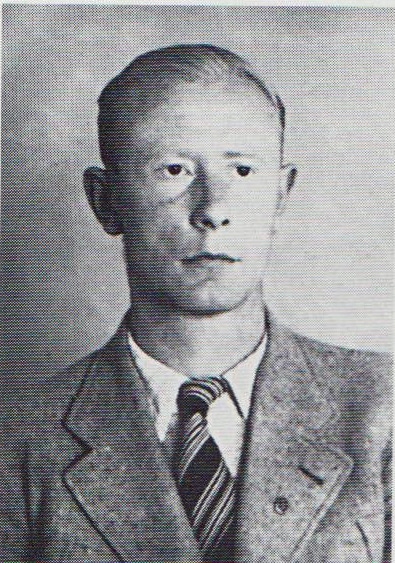
Hans Bothmann

Hans Bothmann

SS-Hauptsturmführer & Kriminalkommissar Hans Bothmann, commandant; born November 11, 1911 in Dithmarschen, Germany; arrested by the British on April 4, 1946; hanged himself the same day
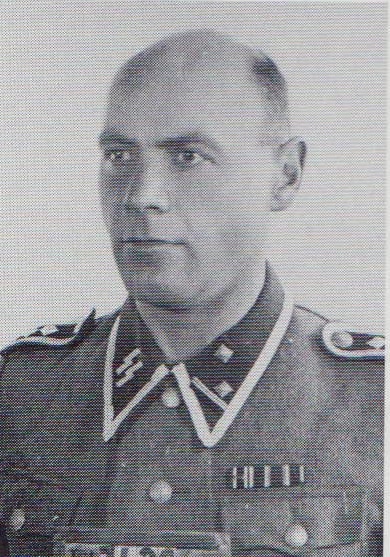
Erwin Bürstinger

Erwin Bürstinger

SS-Hauptscharführer Erwin Bürstinger, motor pool; born February 16, 1908 in Wels, Austria; fate unknown
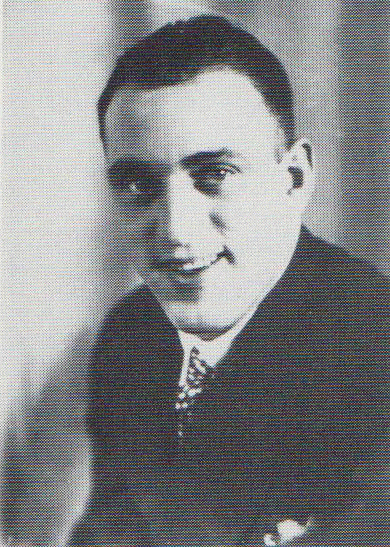
Walter Burmeister

Walter Burmeister

SS-Rottenführer Walter Burmeister, commandant’s driver; sentenced at trial in 1963 to 13 years in prison

Polizeihauptwachtmeister Gustav Fiedler, sergeant of the guard, operated bone-crusher in forest; born October 23, 1910; tried in Germany in 1965 and received sentence of 13 months in prison

SS-Hauptscharführer Karl Goede, victim valuables
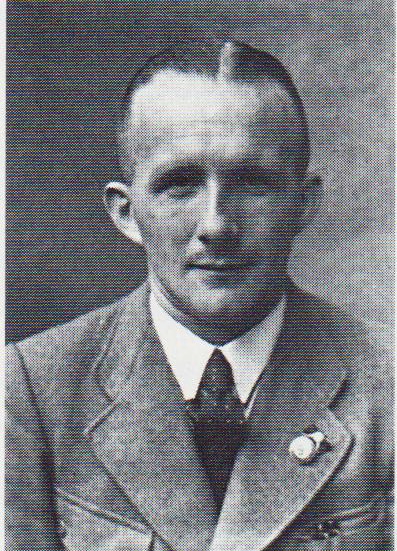
Wilhelm Görlich

Wilhelm Görlich

SS-Hauptscharführer Wilhelm Görlich, administration; taken prisoner by the Soviets in February 1945; sentenced to 25 years in prison; released in 1949
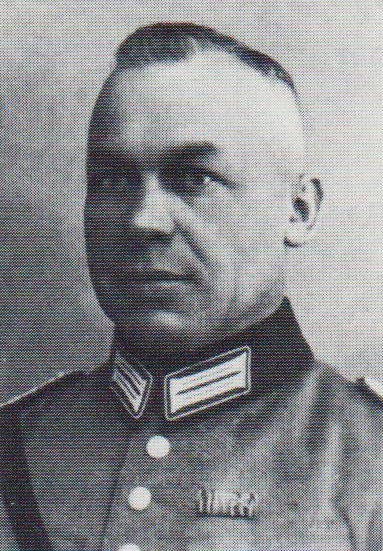
Alois Häfele

Alois Häfele

Polizeimeister/Revierleutnant Alois Häfele, supervisor of Jewish labor at the mansion; born July 5, 1893 in Württemberg; sentenced at trial in 1963 to 15 years in prison; sentence reduced to 13 years on appeal

Polizeiwachtmeister Simon Haider, forest guard commander; died November 4, 1958

Polizeioberwachtmeister Karl Heinl, mansion guard commander; born April 11, 1912; sentenced at trial in 1963 to 7 years in prison

Polizeiwachtmeister Friedrich Hensen; born November 29, 1920

SS-Oberscharführer Oskar Hering, gas van driver; killed in action with the 7th SS Volunteer Mountain Division “Prinz Eugen” at Vratanica, Serbia on October 4, 1944

(Police) Wilhelm Heukelbach, guard; born February 28, 1911; sentenced at trial in 1963 to 13 months in prison; sentence dropped on appeal
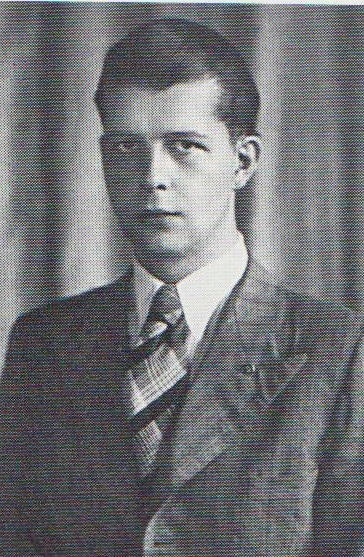
Herbert Hiecke-Richter

Herbert Hiecke-Richter

SS-Oberscharführer Herbert Hiecke-Richter, transport commander; fate unknown

Revieroberwachtmeister Kurt Hoffmann, operated bone-crusher in forest

Polizeioberleutnant Gustav Hüfing, supervisor police guard; born in Wesel; died July 24, 1958
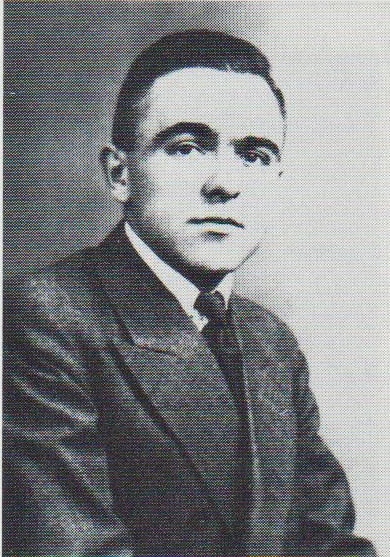
Fritz Ismer

Fritz Ismer

SS-Hauptscharführer Fritz Ismer, victim valuables; served in the 10th SS Panzer Division “Frundsberg”; no charges were ever brought against him
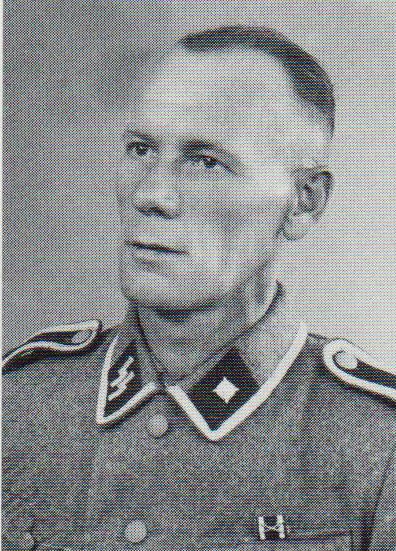
Erich Kretschmer,

Erich Kretschmer

SS-Unterscharführer & Polizei-Oberwachtmeister Erich Kretschmer, transport guard commander; fate unknown
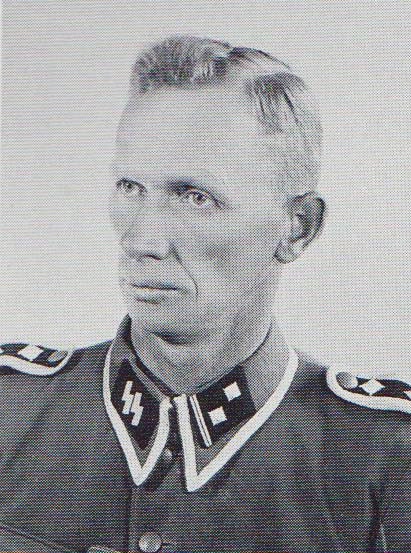
Gustav Laabs

Gustav Laabs

SS-Hauptscharführer Gustav Laabs, gas van driver; born December 20, 1902; sentenced at trial in 1963 to 15 years in prison; sentence reduced to 13 years on appeal

Polizeioberleutnant Harold (Harry) Lang, supervisor police guard, fate unknown
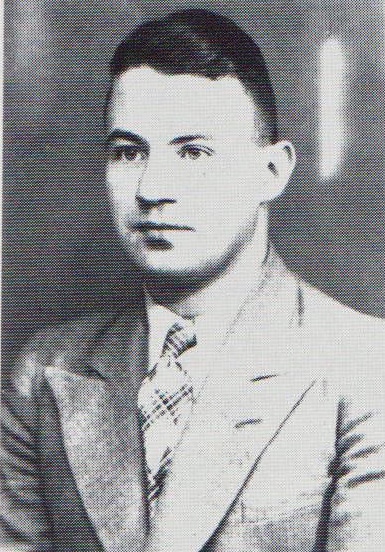
Herbert Lange

Herbert Lange

SS-Hauptsturmführer Herbert Lange, commandant; born September 29, 1909 in Menzlin, Pomerania; killed in action on April 20, 1945 at Niederbarim near Berlin

Polizeimeister Willi Lenz, supervisor forest camp; born in Silesia; ambushed and hanged by last surviving group of Jews on January 18, 1945 at the granary as the Nazis evacuated Chełmno

Polizeioberleutnant Harri Maas, supervisor police guard

(Police) Friedrich Maderholz, guard; born November 7, 1919; sentenced at trial in 1963 to 13 months in prison; sentence dropped on appeal

Polizeiwachtmeister Theodore Malzmüller, guard; served with the 7th SS Volunteer Mountain Division “Prinz Eugen”; provided testimony at post-war trial in Germany

(Police) Mehring, guard; born March 25, 1920; acquitted at trial in 1963

Polizeimeister Kurt Möbius, transportation at the mansion facility; born May 3, 1895; sentenced at trial in 1963 to 8 years in prison

SS-Hauptscharführer Friedrich Neumann, administration
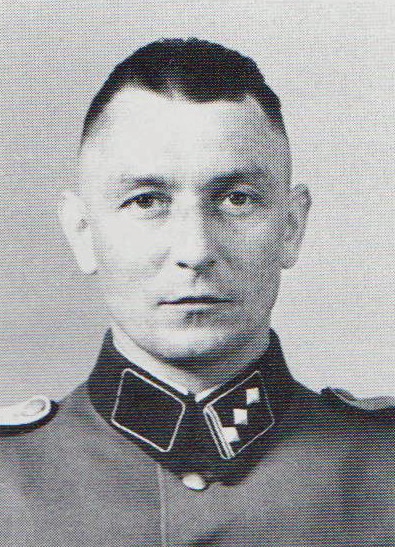
Herbert Otto, Chełmno,

Herbert Otto

SS-Obersturmführer Herbert Otto, deputy commandant; born October 9, 1901 in Dresden; killed in Prague, Czechoslovakia on May 6, 1945

SS-Scharführer Rudolf Otto, guard
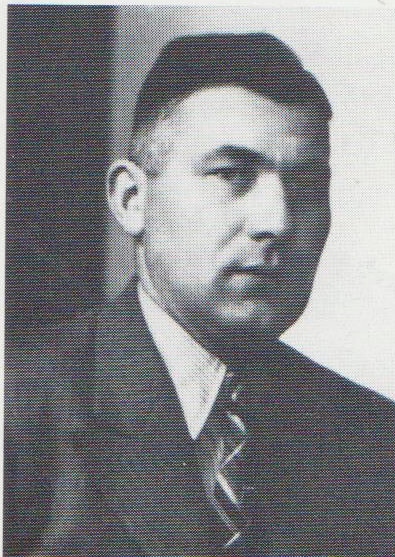
Albert Plate

Albert Plate

SS-Sturmscharführer Albert Plate, deputy commandant; killed in action on October 4, 1944 with the 7th SS Volunteer Mountain Division “Prinz Eugen”
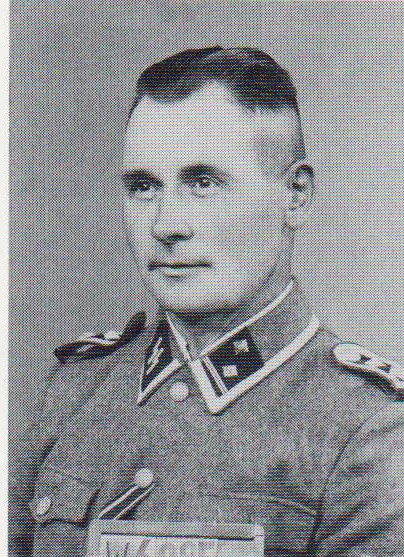
Johannes Runge

Johannes Runge

SS-Hauptscharführer Johannes Runge, forest camp, built crematoria ovens; believed to have died of his wounds after being captured by the Soviets in February 1945 at Poznań, Poland

SS-Hauptscharführer Erwin (Erich) Schmidt, canteen & provisions; believed killed in action in February 1945 at Poznań, Poland

(Police) Wilhelm Schulte, guard; born June 23, 1912; sentenced at trial in 1963 to 13 months in prison; sentence dropped on appeal

SS-Unterscharführer Max Sommer, victim valuables; died in Bonn prior to trial

(Police) Alexander Steinke, guard; acquitted at trial in 1963

Franz Walter, gas van driver

Toni Wornshofer, truck driver

(March 19, 1944-January 18, 1945)

SS-Hauptsturmführer & Kriminalkommissar Hans Bothmann, commandant; born November 11, 1911 in Dithmarschen, Germany; arrested by the British on April 4, 1946; hanged himself the same day

SS-Hauptscharführer Erwin Bürstinger, motor pool; born February 16, 1908 in Wels, Austria; fate unknown
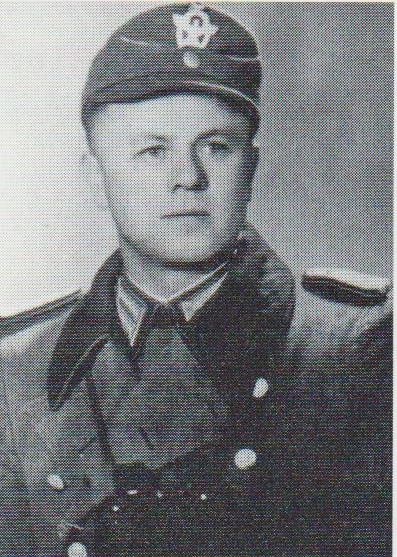
Ernst Burmeister

Ernst Burmeister

Polizeileutnant Ernst “Max” Burmeister, commanded police detachment; sentenced at trial in 1963 to 3 ½ years in prison

SS-Unterscharführer Walter Burmeister, commandant’s driver; sentenced at trial in 1963 to 13 years in prison

SS-Hauptscharführer Hermann Gielow, gas van driver; born October 9, 1892 in Berlin; tried in Poland; received death sentence; executed at Poznań, Poland on June 6, 1951

SS-Hauptscharführer Wilhelm Görlich, administration; taken prisoner by the Soviets in February 1945; sentenced to 25 years in prison; released in 1949

Revierleutnant Alois Häfele, supervisor of Jewish labor; sentenced at trial in 1963 to 15 years in prison; sentence reduced to 13 years on appeal

SS-Hauptscharführer Herbert Hiecke-Richter, victim valuables; fate unknown

Polizeioberwachtmeister Bruno Israel, guard; born August 19, 1906 in Łódź; tried in Poland; received death sentence; commuted to life in prison; released from prison December 12, 1958; died in Mindelheim, West Germany on April 17, 1968

SS-Unterscharführer & Polizei-Oberwachtmeister Erich Kretschmer, supervisor crematoria ovens; fate unknown

SS-Hauptscharführer Gustav Laabs, gas van driver; born December 20, 1902; sentenced at trial in 1963 to 15 years in prison; sentence reduced to 13 years on appeal

Polizeimeister Willi Lenz, supervisor forest camp; born in Silesia; ambushed and hanged by last surviving group of Jews on January 18, 1945 at the granary as the Nazis evacuated Chełmno
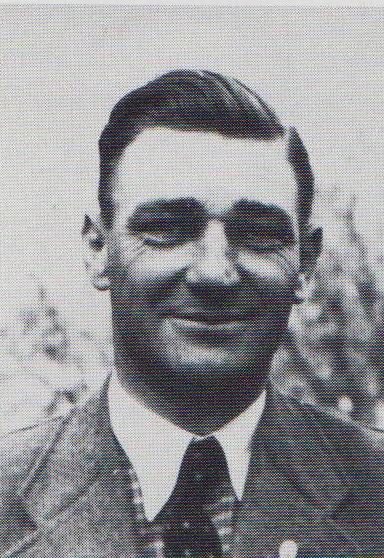
Walter Piller, Sonderkommando Lange

Walter Piller

SS-Oberscharführer Walter Piller, deputy commandant, drove gas van; born December 14, 1902 in Berlin; tried in Poland; received death sentence; executed on January 19, 1949 in Łódź

Polizeiwachtmeister Rufenach, guard

SS-Hauptscharführer Johannes Runge, forest camp, supervisor crematoria ovens; believed to have died of his wounds after being captured by the Soviets in February 1945 at Poznań, Poland

SS-Sturmscharführer Wilhelm Schmerse, deputy commandant

SS-Hauptscharführer Erwin (Erich) Schmidt, canteen & provisions; believed killed in action in February 1945 at Poznań, Poland

SS-Scharführer Stefan Seidenglanz, driver; fate unknown

Polizeiwachtmeister Arthur Sliwke, guard

SS-Unterscharführer Max Sommer, administration; died in Bonn prior to trial

SS-Hauptscharführer Ernst Thiele, driver; fate unknown

The following individuals are reported to have been at Chełmno, but it is not clear when they served there or what position they held:

Polizeiwachtmeister Bartel

Polizeiwachtmeister Blench

Polizeiunterwachtmeister Bollmann

Polizeioberwachtmeister Daniel

SS-Unterscharführer Walter Filer

Polizeiwachtmeister Moyz Kerzer

Polizeioberwachtmeister Oskar Kraus

Polizeiwachtmeister Friedrich Loscheck

Polizeiwachtmeister Sepp Reissner

Polizeiwachtmeister Anton Reiblinger

SS-Sturmscharführer Albert Richter

Polizeiwachtmeister Erich Rombach

SS-Scharführer Franz Schalling

SS-Rottenführer Wilhelm Sefler
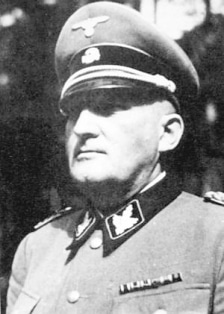
Chełmno/Kulmhof2016-03-06T10:31:09-06:00

Richard Glücks

Richard Glücks

Richard Glücks

Richard Glücks was born on April 22, 1889 (two days after Adolf Hitler) in the city of Odenkirchen.  After graduating from high school (gymnasium), he worked at his father’s fire insurance agency.  In 1909, Glücks joined the army and served in the artillery for a year.  In 1913, he lived in England and later moved to Argentina as a businessman.  After World War I erupted, Glücks returned to Germany and joined the army, during which time he won the Iron Cross First and Second Class.  After the war, Richard Glücks served in the Freikorps.

Glücks joined the Nazi Party in 1930 and the SS in 1932.  On April 1, 1936, he became the chief of staff for Theodor Eicke, then Concentration Camps Inspector.  When Theodor Eicke joined SS Division “Totenkopf“, Glücks was elevated to Concentration Camps Inspector and on November 18, 1939, Heinrich Himmler named him as Eicke’s successor.

On April 20, 1941, Himmler promoted Glücks to the grade of SS-Brigadeführer and on March 29, 1942, he assumed the position of the head of Amt D: Konzentrationslagerwesen of the SS-Wirtschafts-Verwaltungshauptamt (WVHA), the Economics and Administrative Department of the SS.  He was promoted on July 23, 1943 to SS-Gruppenführer and a Generalleutnant of the Waffen-SS.

By the end of the war, the WVHA headquarters transferred from Berlin to Born in Pomerania.  Richard Glücks and his wife are believed to have fled the advancing Allies to Flensburg at the end of April 1945.  Some sources believe that he took poison and committed suicide at the Mürwik Kriegsmarine base at Flensburg-Mürwik, but the chaos, lack of official records and the absence of a set of identifiable remains has led to speculation that he may have escaped justice and fled to Argentina and safety.

Richard Glücks2016-03-04T17:31:16-06:00

Wannsee Conference Participants

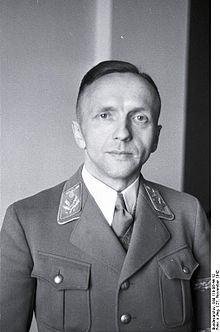
Gerhard Klopfer

Gerhard Klopfer, attendee at the Wannsee Conference

The following individuals participated in the Wannsee Conference (Wannsee-Konferenz, Wannseekonferenz), held in the Berlin suburb of Wannsee on January 20, 1942, to achieve bureaucratic unanimity concerning the Final Solution of the Jewish Question (Endlösung, Endlösung der Judenfrage), a euphemism for the destruction of the Jews in Europe.

SS-Obergruppenführer Reinhard Heydrich, Chief of the RSHA (Reichssicherheitshauptamt/ Reich Main Security Office) and Deputy Reich Protector of Bohemia and Moravia; ambushed in Prague on May 27, 1942 and died of his wounds on June 4, 1942.

State Secretary Roland Freisler, Reich Ministry of Justice; killed in an air-raid in Berlin on February 3, 1945.

SS-Sturmbannführer Rudolf Lange, Commander of the Sicherheitspolizei (Security Police; SiPo) and the SD for the General-District Latvia, Deputy of the Commander of the SiPo and the SD for the Reichskommissariat Ostland, and Head of Einsatzkommando 2; killed in action (or suicide) at Posen/Poznań, Poland on February 23, 1945.

State Secretary and Deputy Reich Minister Alfred Meyer, Reich Ministry for the Occupied Eastern Territories; committed suicide on April 11, 1945 near Hessisch Oldendorf.

SS-Gruppenführer Heinrich Müller, Chief of Amt IV (Gestapo) in the Reich Main Security Office; last seen in Berlin on April 30, 1945 – fate unknown.

Undersecretary of State Martin Luther, Reich Foreign Ministry; finished the war in a concentration camp after falling out with Foreign Minister Ribbentrop; died in Berlin of heart failure in May 1945.

SS-Oberführer Karl Eberhard Schöngarth, Commander of the SiPo (Security Police) and the SD (Security Service) in the General Government; hanged for war crimes (killing British prisoners of war) at Hameln Prison on May 16, 1946 (executioner – Albert Pierrepoint.)

Ministerial Director Friedrich Wilhelm Kritzinger, Permanent Secretary at the Reich Chancellery (representing Dr. Hans Lammers); acquitted of war crimes; died at Nürnberg on April 25, 1947.

State Secretary Josef Bühler, General Government (representing Governor-General Dr. Hans Frank); tried in Poland for war crimes and executed in Kraków, Poland on August 22, 1948.

State Secretary Erich Neumann, Office of the Plenipotentiary for the Four Year Plan; briefly imprisoned; died at Garmisch-Partenkirchen on March 23, 1951.

State Secretary Wilhelm Stuckart, Reich Interior Ministry; imprisoned for four years before being released for lack of evidence in 1949; killed in a car accident near Hanover on November 15, 1953.

SS-Obersturmbannführer Adolf Eichmann, Head of Referat IV B4 of the Gestapo; hanged at Ramla Prison in Israel on June 1, 1962.

Ministerial Director Georg Leibbrandt, Reich Ministry for the Occupied Eastern Territories; charged with war crimes but the case against him was dismissed in 1950; died in Bonn on June 16, 1982.

SS-Gruppenführer Otto Hofmann, Head of the SS Race and Settlement Main Office (RuSHA); sentenced to 25 years in prison for war crimes, but was pardoned in 1954; died in Bad Mergentheim on December 31, 1982.

Ministerial Director Gerhard Klopfer, Permanent Secretary of the Nazi Party Chancellery (representing Martin Bormann); charged with war crimes but released for lack of evidence; died on January 29, 1987.


Wannsee Conference Participants2016-03-02T21:18:07-06:00

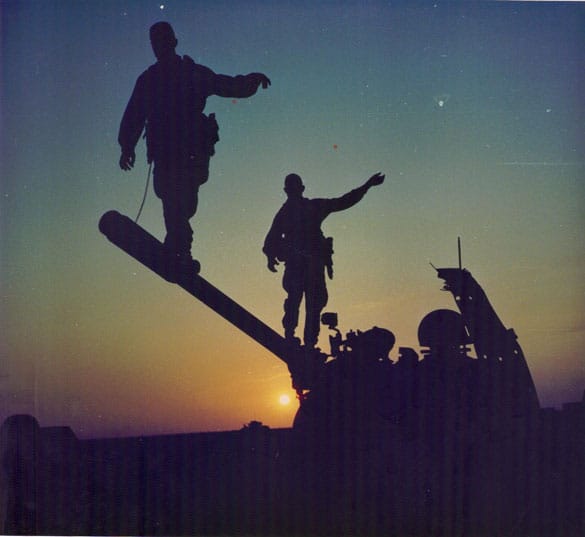
VII Corps Desert Storm Reunion, 26-28 February 2016

3rd Armored Division, 5-18 Infantry

VII Corps Desert Storm Veterans Association, Desert Storm Reunion, 26-28 February 2016

Let me start this with something I hope that you will take to heart.  My father, who died last summer at age 91, had been an infantry private first class in the Ninth Infantry Division in the Hürtgen Forest and Battle of the Bulge in World War II.  He had always wanted to see his old buddies again, but for one reason or another, he never made it to a reunion and regretted that till the day he died.

So, if you have ever wanted to get back together with your buddies from Desert Storm, this is it!

The twenty-fifth anniversary is here upon us; where has the time gone?  At age 63, I’m not waiting for the 50th reunion, although if I’m around for it, I’ll go to that one also.

Every veteran of VII Corps from Desert Storm, and especially in my case every veteran of the Third Armored Division “Spearhead,” is warmly welcomed to gather outside our nation’s capital (primarily Crystal City, VA) at the end of February to meet with old comrades and friends, catch up on what everyone has been doing since we were “young” and most importantly pay our respects to the true heroes of that war, our comrades in arms who made the ultimate sacrifice and died before they could grow old and do all the things that we sometimes take for granted.

First, this is not just a gathering of “old,” retired generals, although many will certainly be there.  But those folks did not win the war; you did…the “skeeter-wings,” the specialists, the buck sergeants, the first sergeants and the CSMs, so please attend if you can make it, and be sure to tell the folks you have stayed in contact with to go as well.

Registration

Online registration for the 25th Reunion is available at this link: http://25.desertstormvets.org/

You can purchase your banquet tickets, register for your hotel room at the special rate of $99 per night and also see updated schedule of events.  The special rate of $99 per night for hotel rooms will be available until 5 February 2016.

Here are some of the events planned, as I know them in late January; please check often: http://25.desertstormvets.org/

This will be updated on a regular basis with latest information as related to the reunion.

All units

Friday, 26 February, beginning 3:00 pm, out of town guests check in at Crystal Gateway Hotel at leisure.  After that, check in across from registration at the VII Corps Reunion Ops Center to get your name badges for all attendees and guests as well as memorabilia items for distribution to all attendees.

Third Armored Division (Spearhead)

Friday, 26 February, gathering beginning at 6:00 pm at the Crystal City Sports Pub, 529 South 23rd Street, Arlington VA 22202 (the only charge is what you consume food and beverages.)

VII Corps Artillery

Friday, 26 February, reception in the Jackson Room (Crystal Gateway Marriott Hotel) from 7:00 to 9:00 pm.  There will be a cash bar and “heavy” hors d’oeuvres. (I guess “heavy” is to make sure all the tankers attend.)

Saturday, 27 February, buffet breakfast from 7:30 to 9:00 am in the Jackson Room (Crystal Gateway Marriott Hotel.)

All units

Saturday, 27 February, 10:00-11:00 am, General Membership Meeting, VII Corps Desert Storm Reunion Association across from check-in desk, Crystal Gateway Marriott Hotel.

All units

Saturday, 27 February; Memorial Service Arlington Cemetery: 1:15 pm, depart Crystal Gateway Marriott Hotel for Memorial Service (Transportation buses will be provided free of charge); 2:00 pm, VII Corps DSVA Annual Memorial Service at Fort Myer Memorial Chapel to honor the 111 Soldiers who served in VII Corps during Operations Desert Shield & Desert Storm who gave the ultimate sacrifice. Lieutenant General Karen Dyson – Military Deputy to the Assistant Secretary of the Army (Financial Management & Comptroller) – will be the guest speaker.  LTG Dyson was a company commander in VII Corps (7th Finance Group) during Desert Shield & Desert Storm; 3:25 pm, depart Memorial Service for Arlington National Cemetery for wreath laying ceremony at the Tomb of The Unknown Soldier; 4:00 to 4:30 pm, Changing of the Guard and VII Corps DSVA Wreath Laying at the Tomb of the Unknown Soldier; 4:45 pm, depart Arlington National Cemetery for Crystal Gateway Marriott Hotel.

All units

Saturday, 27 February; 7:30 to 10:00 pm, VII Corps DSVA 25th Annual Banquet – Grand Ballroom (Crystal Gateway Marriott Hotel).  This is for all attendees.  Guest Speaker will be GEN Martin Dempsey USA-Ret) – 18th Chairman of the Joint Chiefs of Staff, who got his “start” as XO of the Third Brigade, Third Armored Division during Desert Storm.  I am pretty sure that LTG (USA-Ret) Paul Funk, our Third Armored Division commander will be there.

Addresses:

E-Mail Address: viicorpsvets@gmail.com

Regular mailing address:

VII Corps Desert Storm Veterans Association

2425 Wilson Boulevard

Arlington, Virginia 22201

Points of contact:

Email these folks to get more information on specific topics:

VII Corps Artillery

Stan Lenox at 512-897-7751 or by e-mail at slenox@austin.rr.com.

Third Armored Division (Spearhead)

Rob Goff at 540-422-9588 or by e-mail at lrgoff3@gmail.com OR Bob Reeves at 254-231-8970 or by e-mail at robert.reeves54@gmail.com.

First Cavalry Division

Jim Bob Rollins by email at acpac@consolidated.net.john.

First Infantry Division

Doug Morrison at 703-772-7614 or by e-mail at Dm371482@gmail.com.

Second Armored Cavalry Regiment

David Boyce at 623-451-5637 or by e-mail at dboyce1@cox.net.

First UK Armoured Division

John Geis by e-mail at 1UKXX-G5-SO1-US@mod.uk

VII Corps DSVA Ops Center

There will be an Ops Center set up in BIN 1700 which is located across from the check in desk at Crystal Gateway Marriott.  All attendees can pick up their name badge as well as memorabilia items we are distributing and also receive information on all events that will take place during the weekend.  Please do not hesitate to contact viicorpsdsva@gmail.com for any questions you may have.

Every single one of you did something quite special and remarkable back then; please come back to the reunion so that we can all meet again.


VII Corps Desert Storm Reunion, 26-28 February 20162022-10-08T17:52:18-05:00

German Sixth Army Order of Battle

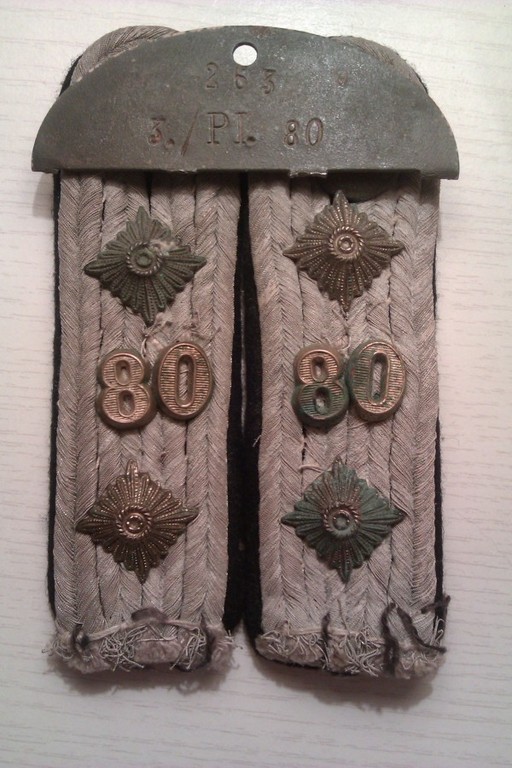
Effects of a 44th Infantry Division soldier from Stalingrad

Effects of a 44th Infantry Division soldier from Stalingrad

Sixth Army; Surrendered January 30, 1943


6th Artillery Command (Arko 6)

Sixth Army Engineer Replacement Battalion

Bridge Column B22

21st Bridge Construction Battalion (Mot)

25th Observation Detachment

28th Observation Detachment (Mot)

144th Artillery Command (Arko 144)

145th Artillery Command (Arko 145)

310th Higher Artillery Command (Harko 310)

413th Engineer Regiment

521st Army Signal Regiment

540th Office for Food Supply

541st Military Hospital Detachment

541st Medical Evacuation Detachment

542nd Medical Evacuation Detachment

542nd Supply Battalion

549th Army Signal Regiment

562nd Medical Evacuation Detachment

592nd Army Medical Detachment

593rd Motor Repair Detachment

601st Signal Regiment

608th Survey & Map Detachment

617th Survey & Map Detachment

790th Medical Evacuation Detachment


Corps


IV Corps; Surrendered January 31, 1943


44th Corps Signal Detachment

404th Artillery Command (Arko 404)

404th Supply Command


VIII Corps; Surrendered January 31, 1943


48th Corps Signal Detachment

408th Artillery Command (Arko 408)

408th Supply Command


XI Corps; Surrendered February 2, 1943


51st Corps Signal Detachment

411th Artillery Command (Arko 411)

411th Supply Command


XIV Panzer Corps; Surrendered February 2, 1943


60th Corps Signal Detachment

60th Pioneer Battalion (Mot)

414th Artillery Command (Arko 414)

414th Supply Command


LI Corps; Surrendered January 31, 1943


153rd Artillery Command (Arko 153)

451st Corps Signal Detachment

451st Supply Command


Divisions


3rd Infantry Division (Motorized) (PzA 103, GR 8 *, GR 29 *, AR 3, PiB 3, KrB 53, PzJA 3, NA 3, FlakA 312); Annihilated January 22, 1943


14th Panzer Division (PR 36 *, PGR 103, PGR 108, PAR 4, PzPiB 13, KrB 64, PzNA 4); Surrendered February 2, 1943


16th Panzer Division (PR 2, PGR 64, PGR 79, PAR 16, PzPiB 16, PzJA 16, KrB 16, PzNA 16); Surrendered February 2, 1943


22nd Panzer Division (August-September only) (PR 204, PGR 129, PGR 140, AR 140, KrB 24, PzJA 140, PzPiB 50, NA 140); Transferred to another command and survived


24th Panzer Division (PR 24, PGR 21, PGR 26, PAR 89, PzPiB 40, KrB 4, PzJA 40, PzNA 86); Surrendered February 2, 1943

29th Infantry Division (Motorized) (PA 129, GR 15, GR 71, AR 29, PiB 29, KrB 29, PzJA 29, NA 29); Annihilated January 22, 1943


44th Infantry Division (GR 131, GR 132, GR 134, AR 96, PiB 80, PzJA 46, AA 44, NA 64); Surrendered February 2, 1943


60th Infantry Division (Motorized) (PzA 160, IR (mot) 92, IR (mot) 120, AR 160, PzJA 160, KrB 160, NA 160); Surrendered February 2, 1943


71st Infantry Division * (GR 191, GR 194, GR 211, AR 171, PiB 171, PzJA 171, NA 171); Surrendered January 31, 1943


76th Infantry Division (GR 178, GR 202, GR 230, AR 176, AA 176, PiB 176, PzJA 176, NA 176); Annihilated January 22, 1943


79th Infantry Division (GR 208, GR 212, GR 226, AR 179, PiB 179, AA 179, PzJA 179, NA 179); Disbanded January 8, 1943


94th Infantry Division (GR 267, GR 274, GR 276, AR 194, PiB 194, AA 194, PzJA 194, NA 194); Disbanded December 10, 1942


100th Jäger Division (JR 54, JR 227, IR 369 (Croat), AR 83, AA 100, PiB 100, PzJA 100, NA 100); Surrendered January 31, 1943


113th Infantry Division (GR 260, GR 261, GR 268, AR 87, PiB 113, PzJA 113, AA 113, NA 113); Surrendered February 2, 1943


295th Infantry Division (GR 516, GR 517, GR 518, AR 295, PiB 295, PzJA 295, NA 295); Surrendered January 31, 1943


297th Infantry Division (GR 522, GR 523, GR 524, AR 297, PiB 297, PzJA 297, AA 297, NA 297); Annihilated January 22, 1943


298th Infantry Division; Transferred to another command and survived


305th Infantry Division (GR 576, GR 577, GR 578, AR 305, PiB 305, PzJA 305, NA 305; Surrendered January 31, 1943


371st Infantry Division (GR 669, GR 670, GR 671, AR 371, PiB 371, PzJA 371, NA 371); Surrendered January 31, 1943


376th Infantry Division (GR 672, GR 673, GR 767, AR 376, PiB 376, PzJA 376, AA 376, NA 376); Surrendered February 2, 1943


384th Infantry Division (GR 534, GR 535, GR 536, AR 384, PiB 384, PzJA 384, NA 384); Disbanded December 5, 1942


389th Infantry Division (GR 544, GR 545 *, GR 546, AR 389, PiB 389, PzJA 389, NA 389); Surrendered January 31, 1943


Sixth Army Independent Units; available for attachment to corps and divisions


1st Construction Battalion

2nd Heavy Werfer Regiment (I & III Battalions)

6th Armored Train

7th Artillery Observation Detachment

9th Machinegun Detachment

10th Armored Train

16th Fortress Construction Battalion

29th Artillery Observation Detachment

36th Artillery Observation Detachment

40th Light Artillery Observation Detachment

41st Pioneer Battalion (Mot)

43rd Engineer Battalion

43rd Light Observation Detachment

45th Pioneer Battalion (August, November onward)

2nd Battalion of the 46th Artillery Regiment (Hvy How)

50th Panzer Pioneer Battalion (November onward)

51st Werfer Regiment *

2nd Battalion of the 53rd Heavy Artillery Regiment (10cm Cannon)

53rd Werfer Regiment

2nd Battalion of the 54th Artillery Regiment

2nd Battalion of the 59th Artillery Regiment (Hvy How)

2nd Battalion of the 64th Artillery Regiment (10cm Cannon)

71st Pioneer Battalion

2nd Battalion of the 72nd Artillery Regiment (15cm Cannon)

101st Heavy Artillery Detachment (Hvy How)

110th Construction Battalion

130th Construction Battalion

161st Construction Battalion

162nd Pioneer Battalion (November onward)

177th Sturmgeschütz Detachment

243rd Sturmgeschütz Detachment (November onward)

244th Sturmgeschütz Detachment

245th Sturmgeschütz Detachment

255th Bridge Construction Battalion

294th Pioneer Battalion (November onward)

336th Pioneer Battalion (November onward)

413th Engineer Regimental Staff

430th Heavy Artillery Detachment (10cm Cannon)

501st Light Road Construction Battalion

521st Panzerjäger Detachment

521st Road Construction Battalion

522nd Bridge Construction Battalion

540th Road Construction Battalion

541st Army Supply Command

541st Military Police Detachment

542nd Guard Battalion

571st Military Police Detachment

602nd Flak Detachment (Mot)

604th Engineer Regimental Staff

605th Engineer Regimental Staff

608th Flak Detachment (Mot)

611th Panzerjäger Detachment

614th Flak Battalion (Mot)

616th Heavy Artillery Detachment (21cm Mortars)

627th Artillery Regiment Staff

631st Heavy Artillery Detachment (10cm Cannon)

635th Pioneer Battalion (Mot)

651st Pioneer Battalion

652nd Pioneer Battalion

655th Bridge Construction Battalion

670th Panzerjäger Detachment

672nd Pioneer Battalion

677th Engineer Regimental Staff

733rd Heavy Artillery Detachment (21cm Mortars)

754th Pioneer Battalion

800th Heavy Artillery Detachment (35.5cm Mortars)

849th Heavy Artillery Detachment (10cm Cannon)

851st Heavy Artillery Detachment (10cm Cannon)

855th Heavy Artillery Detachment (21cm Mortars)

912th Assault Boat Commando


Significant Luftwaffe Units with a Ground Combat Mission


9th Flak Division (FR 8, FR 25, FR 37, FR 91, FR 99, FR 104, FR 241, Air Signal Bn 129, Supply Regiment 9); Surrendered January 31, 1943


Battle Group Stahel (99th Flak Regiment)


Legend:


AA = Reconnaissance Detachment (Auflärungs Abteilung)

AR = Artillery Regiment

FR = Flak Regiment (Anti-Aircraft Regiment)

GR = Grenadier Regiment (Infantry Regiment in a regular Infantry Division)

IR (mot) = Infantry Regiment in a Motorized Infantry Division

JR = Light Infantry Regiment (Jäger Regiment; an infantry regiment in the 101st Jäger Division)

KrB = Motorcycle Infantry Battalion (Kradshützen Bataillon)

NA = Signal Detachment (Nachrichten Abteilung)

PAR = Panzer Artillery Regiment (Armored, Self-Propelled, Artillery Regiment)

PGR = Panzer Grenadier Regiment (Mechanized Infantry Regiment in a Panzer Division)

PiB = Pioneer (Combat Engineer) Battalion

PR = Panzer Regiment

PzA =Panzer Detachment (Panzer Abteilung)

PzPiB = Armored Pioneer (Combat Engineers) Battalion in a Panzer Division

PzJA = Anti-tank Detachment (Panzerjäger Abteilung)

PzNA = Armored Signal Detachment in a Panzer Division

German Sixth Army Order of Battle2016-01-19T07:57:12-06:00

German Army Ranks

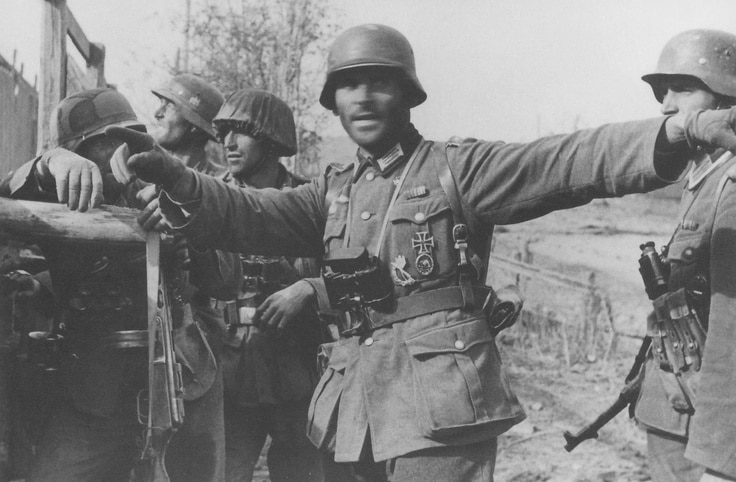
305th Infantry Division soldiers at Stalingrad


The following German Army ranks, and their American Army equivalents in World War II, are provided for use when reading Stalingrad: The Death of the German Sixth Army on the Volga, 1942-1943.  They are also found in an appendix of the book.


Soldat [Soldier/Private]

Funker [(Radioman), Private in Communications]

Grenadier [Private in the Infantry]

Jäger [(Hunter), Private in the Light and Mountain Divisions]

Kanonier [(Gunner), Private in the Artillery

Panzerjäger [(Tank Hunter), Private in an Anti-Tank unit]

Pioneer [Private in the Engineers]

Panzerschütze [Private in the Motorized Infantry]

Reiter [(Trooper), Private in the Cavalry]

Schütze [(Private in the Infantry)


Obersoldat [Senior Private]

Oberfunker [(Radioman), Senior Private in Communications]

Obergrenadier [Senior Private in the Infantry]

Oberjäger [(Hunter), Senior Private in the Light and Mountain Divisions]

Oberkanonier [(Gunner), Senior Private in the Artillery

Oberpanzerjäger [(Tank Hunter), Senior Private in an Anti-Tank unit]

Oberpioneer [Senior Private in the Engineers]

Oberpanzerschütze [Senior Private in the Motorized Infantry]

Oberreiter [(Trooper), Senior Private in the Cavalry]

Oberschütze [Senior Private in the Infantry]


Gefreiter [Private First Class]

Obergefreiter [Acting Corporal]

Sanitäts-Obergefreiter [Acting Corporal in the Medical Corps]

Stabsgefreiter [Acting Corporal of Administration]

Unteroffizier [Corporal]

Unterfeldwebel [Sergeant]

Fahnenjunker [Sergeant who was also an Officer Candidate]

Unterwachtmeister [Sergeant in Artillery, Reconnaissance or Cavalry]

Feldwebel [Staff Sergeant]

Wachtmeister [Staff Sergeant in Artillery, Reconnaissance or Cavalry]

Fahnenjunker-Feldwebel [Staff Sergeant who was also an Advanced Officer Candidate]

Oberfeldwebel [Technical Sergeant]

Oberwachtmeister [Technical Sergeant in Artillery, Reconnaissance or Cavalry]

Oberfähnrich [Technical Sergeant who was also a Senior Officer Candidate]

Stabsfeldwebel [Master Sergeant]

Stabswachtmeister [Master Sergeant in Artillery, Reconnaissance or Cavalry]


Leutnant [Second Lieutenant]

Oberleutnant [First Lieutenant]

Hauptmann [Captain]

Major [Major]

Oberstleutnant [Lieutenant Colonel]

Oberst [Colonel]

Generalmajor [Brigadier General/1-star General]

Generalleutnant [Major General/2-star General]

General der Artillerie [Lieutenant General in the Artillery/3-star General]

General der Infanterie [Lieutenant General in the Infantry/3-star General]

General der Panzertruppe [Lieutenant General in the Armored Troops/3-star General]

General der Pioniere [Lieutenant General in the Engineers/3-star General]

Generaloberst [Colonel General/4-star General]

Generalfeldmarschall [(Field Marshal)/5-star General]

German Army Ranks2016-01-19T07:45:44-06:00

Company M, Seventh Cavalry, Little Bighorn Battle Roster

Seventh Cavalry insignia

Seventh Cavalry insignia

The following company roster is found in Custer’s Best:

CPT Thomas H. “Tucker” French (Company Commander) [CW] [V2] (MB) {7}

1LT Edward G. “Bible-Thumper” Mathey (detached to command the pack train) [V3]

2LT James G. “Jack” Sturgis (detached with Company E) (KIA)

1SG John “Paddy” Ryan (Company First Sergeant) [CW] [V3] (RS) {3}

SGT Patrick “Patsy” Carey (WIA) [V2] (MB) (RT)

SGT John McGlone [V2] (PT)

SGT Miles O’Hara (KIA) [V2] (AG)

SGT Henry C. Weihe [aka Charles White] (First Duty Sergeant) (WIA) [V2] (AG) (RT)

CPL Henry M. Cody [aka Henry Scollin] (KIA) (AG)

CPL William Lalor [V2] (MB)

CPL Frederick Stressinger (KIA) [V2] (MB)

Trumpeter Charles “Bounce” Fischer (MB)

Trumpeter Henry C. Weaver [CW] (MB)

Saddler John “Jack” Donahoe [V2] (PT)

Farrier William D. “Tinker Bill” Meyer (KIA) [V2] (MB)

Farrier George “Cully” Weaver (MB)

PVT Joseph “Joe” Bates [aka Joseph Murphy] (MB)

PVT Frank Braun (DOW) [R] (AG)

PVT Morris Cain [R] (MB)

PVT James W. Darcy [aka James Wilber] (WIA) [R] (RS)

PVT Henry H. “Harrison” Davis [CW] [V3] (PT)

PVT Jean B. “Frenchy” Gallenne (AG) (H/H)

PVT Jacob H. Gebhart [aka James J. Tanner] (DOW) [R]

PVT Bernard “Barney” Golden (MB)

PVT Henry “Tom” Gordon (KIA) [V2] (AG)

PVT George Heid (MB)

PVT Charles Kavanaugh [CW] (MB)

PVT Henry Klotzbucher (Company Clerk) (KIA) (MB)

PVT George Lorentz (KIA) [V2] (MB)

PVT Daniel Mahoney [R] (MB)

PVT John H. “Snopsy” Meier (WIA) (AG)

PVT Hugh N. Moore [V2] (MB)

PVT William E. “Bill” Morris (WIA) [R] (RS)

PVT Francis “Frank” Neely (AG)

PVT Daniel J. “Dan” Newell (WIA) (AG) (T/B)

PVT Edward D. Pigford (WIA) [R] (MB) {2}

PVT William E. Robinson (detached service as an assistant to Dr. Henry Porter)

PVT Roman “Henry” Rutten (WIA) [V2] (RS)

PVT Hobart Ryder (RS)

PVT William W. Rye [R] (MB)

PVT John Seamans [R] (MB)

PVT Robert Senn [R] (MB)

PVT James W. “Crazy Jim” Severs [V2] (MB)

PVT John “Big Fritz” Sivertsen [V2] (MB) (RT) (T/B)

PVT William C. “Bill” Slaper [R] (MB)

PVT George E. Smith (KIA) [R] (MB)

PVT Frank W. Sniffin (Company Color Bearer) [R] (MB)

PVT Frank Stratton [R] (MB)

PVT David “Sandy” Summers (KIA) (MB) (H/H)

PVT Levi M. Thornberry [R] (MB)

PVT Rollins L. “Robert” Thorpe [R] (AG)

PVT Henry J. “Jim” Turley (KIA) [V2] (AG)

PVT Thomas B. “Happy Jack” Varner (WIA) [R] (MB)

PVT Henry C. Voight (KIA) (MB)

PVT James “Jim” Weeks [R] (MB)

PVT John V. Whisten (MB)

PVT Charles T. Wiedman (WIA) [R] (MB)

PVT Charles H. Williams (MB)


Not Present at the Little Bighorn


SGT William Capes (Powder River Camp)

PVT John Dolan (Powder River Camp)

PVT James McCormick (Powder River Camp)

Wagoner Joseph Ricketts (Powder River Camp)

PVT Walter Sterland (Powder River Camp)

PVT Ferdinand Widmayer (Powder River Camp)

Farrier William Wood (Fort Rice)

PVT John Zametzer (Fort Rice)


Legend:


CPT=Captain; 1LT=First Lieutenant; 2LT=Second Lieutenant; 1SG=First Sergeant; SGT=Sergeant; CPL=Corporal; PVT=Private


KIA= killed in action; WIA=wounded in action; DOW=died of wounds; CW=Civil War veteran; V1=Battle of Washita veteran; V2=fought Indians on 1873 Yellowstone expedition; V3=veteran of both Washita and Yellowstone campaigns; R=recruit (less than nine months service); AG=on advance guard mission; RS=on 1SG Ryan’s timber scout mission; MB=with main body in valley; PT=detailed to pack train; RT=remained in timber during retreat; H/H=believed to have been a horse-holder; T/B=trained as a blacksmith


{2, 3, 7}=estimated number of enemy warriors that the trooper shot during the entire battle

Company M, Seventh Cavalry, Little Bighorn Battle Roster2016-01-19T06:58:18-06:00

Einsatzkommandos in Poland, 1939

The Sicherheitsdienst deployed the following order of battle as Einsatzgruppen and Einsatzkommandos for the 1939 Polish Campaign:


Einsatzgruppe I, also known as EG I–Wien: commanded by SS-Standartenführer Bruno Streckenbach; deployed with the German Fourteenth Army

Einsatzkommando 1/I: commanded by SS-Sturmbannführer Ludwig Hahn

Einsatzkommando 2/I: commanded by SS-Sturmbannführer Bruno Müller

Einsatzkommando 3/I: commanded by SS-Sturmbannführer Alfred Hasselberg

Einsatzkommando 4/I: commanded by SS-Sturmbannführer Karl Brunner


Einsatzgruppe II, also known as EG II–Oppeln: commanded by SS-Obersturmbannführer Emanuel Schäfer; deployed with the German Tenth Army

Einsatzkommando 1/II: commanded by SS-Obersturmbannführer Otto Sens

Einsatzkommando 2/II: commanded by SS-Sturmbannführer Karl-Heinz Rux


Einsatzgruppe III, also known as EG III–Breslau: commanded by SS-Obersturmbannführer Hans Fischer; deployed with the German Eighth Army

Einsatzkommando 1/III: commanded by SS-Sturmbannführer Wilhelm Scharpwinkel

Einsatzkommando 2/III: commanded by SS-Sturmbannführer Fritz Liphardt


Einsatzgruppe IV, also known as EG IV–Dramburg: commanded by SS-Brigadeführer Lothar Beutel (replaced by Josef Albert Meisinger in October 1939); deployed with the German Fourth Army

Einsatzkommando 1/IV: commanded by SS-Sturmbannführer Helmut Bischoff

Einsatzkommando 2/IV: commanded by SS-Sturmbannführer Walter Hammer


Einsatzgruppe V, also known as EG V–Allenstein: commanded by SS-Standartenführer Ernst Damzog; deployed with the German Third Army

Einsatzkommando 1/V: commanded by SS-Sturmbannführer Heinz Gräfe

Einsatzkommando 2/V: commanded by SS-Sturmbannführer Robert Schefe

Einsatzkommando 3/V: commanded by SS-Sturmbannführer Walter Albath


Einsatzgruppe VI: commanded by SS-Oberführer Erich Naumann; deployed in Wielkopolska area

Einsatzkommando 1/VI: commanded by SS-Sturmbannführer Franz Sommer

Einsatzkommando 2/VI: commanded by SS-Sturmbannführer Gerhard Flesch


Einsatzgruppe z. B.V: commanded by SS-Obergruppenführer Udo von Woyrsch and later SS-Oberführer Otto Rasch; deployed in Upper Silesia and Cieszyn Silesia


Einsatzkommando 16, also known as EK–16 Danzig: commanded by SS-Sturmbannführer Rudolf Tröger; deployed in Pomerania.

Einsatzkommandos in Poland, 19392016-01-12T17:25:38-06:00

Walther PPQ M2 .45 ACP

Walther PPQ M2 .45 ACP

Walther PPQ M2 .45 ACP

From the first time you see the Walther PPQ M2 .45 ACP, you know you WANT to buy it.  Now I’m going to tell you why you NEED to buy this pistol.

Designed by Herr Horst Wesp (who joined the firm in 1994) the weapon is made by one of the historically best – if not the best – German armaments firm, Carl Walther in the city of Ulm an der Donau (which translates to Ulm on the Danube River.)  PPQ stands for Police Pistol Quick Defense, PP being in German “Polizei Pistole” – a term first used on a Walther weapon in 1929 and going strong for almost ninety years.  Remember, the Germans make great cars, great optics, great toys and great weapons; you can’t go wrong here.

Designed initially for European police forces and in selected militaries (if I had to guess, I believe that our own special operations community is at the very least testing the Walther PPQ M2 .45 ACP and maybe even already using it,) let me tell you what it really can do for you: protect you from simultaneous multiple attackers, all intent on killing you.  Here is how it does that:

Accuracy: I am a decent marksman, but you are undoubtedly better.  Let’s just say that I am pushing Social Security age and that Ray Charles was a better marksman in The Blues Brothers.  After firing one hundred rounds to become familiar with the pistol, I was able to put all twelve rounds of a magazine into the ten-ring on the B27Q-Blue-Half-Size Police and FBI Training Qualification Practice Target at a range of fifteen feet.  At thirty feet, I am able to put six (50%) of the rounds into the ten-ring.  With practice you’ll be able to meet or exceed this because the Walther PPQ M2 .45 ACP is a natural pointer and has an excellent 3-dot sight system.

Power: It’s a .45 ACP.  What else needs to be said?  For those into numbers, the 4.25-inch barrel will launch a 230-grain Winchester PDX1 Defender jacketed hollow point at 912 feet per second that results in 425 foot-pounds of muzzle energy.  Tests in ballistic gelatin that I have read show this same round expanding to .80 inches, and there are a lot of other excellent rounds that have similar results.  Now I sometimes get confused reading these tests as to how many layers of denim the bullet has to travel through to achieve certain expansion, but one thing I am sure of – the minimum diameter a bullet fired from the Walther PPQ M2 .45 ACP, through any number of layers you want, is going to be .45 inches.

Speed: The Walther PPQ M2 .45 ACP, like its 9mm and .40 caliber brothers, has no external hammer.  Instead, it uses a striker-fire trigger system (also described as a partially cocked single action) in which the initial shot feels like a double action trigger pull (about four pounds,) while for subsequent shots the trigger pull is short, crisp – and fast.  Those follow-on shots feature a trigger pull of a tenth of an inch and equate to a 15.7 ounce pull.  Speed is also enhanced by negligible recoil, so you stay on the targets.  The frame is polymer, but the slide weighs almost a pound and since it moves backward upon firing, it eats up felt recoil.  Less recoil is better.

Tailorability: Every shooter is different and each has special needs and wants.  The Walther PPQ M2 .45 ACP comes with two size, easy to install backstraps to accommodate different hand sizes.  The button magazine release can be changed from the left to the right side of the frame to correspond to a left handed shooter.  The trigger guard is large enough so the shooter can where a glove in colder temperatures.  There is a small built in rail forward of the trigger guard from which you can add a laser sight or a flashlight.

The Walther PPQ M2 .45 ACP is fun to shoot.  Recoil doesn’t bang you around and the 12-round-capacity steel magazines mean you don’t have to change them too often.  More importantly, a weapon that is fun to shoot means you are likely to put in the practice required to fulfill the weapon’s intent and that is self-defense.  Multiple common criminals, read street gangs, involved in a single incident are not that rare.  And ISIS or ISIL, or whatever we are calling this deadly militant Islamic jihadist group these days, has already said that they were going to attack inside America.  That has already happened at Boston, Fort Hood, Chattanooga and San Bernardino.  In half of these attacks, there have been multiple assailants.  In the hands of a capable shooter – you, if God forbid, are in the attack zone – the Walther PPQ M2 .45 ACP can get you out of a multiple-assailant attack in one piece.

Walther PPQ M2 .45 ACP2023-10-08T15:29:27-05:00

Night Stryke

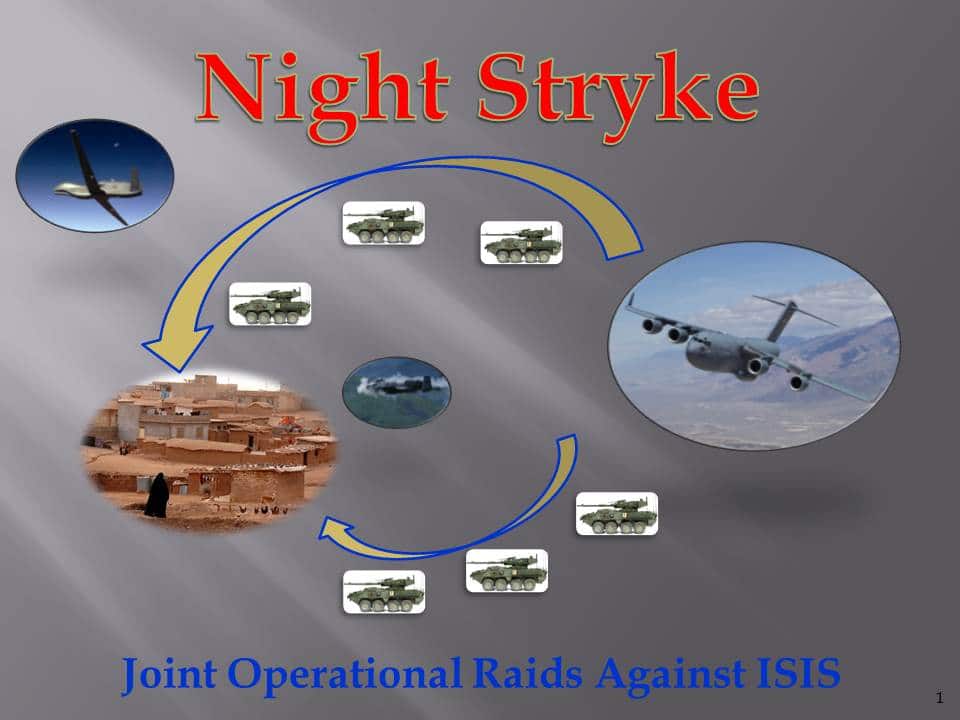
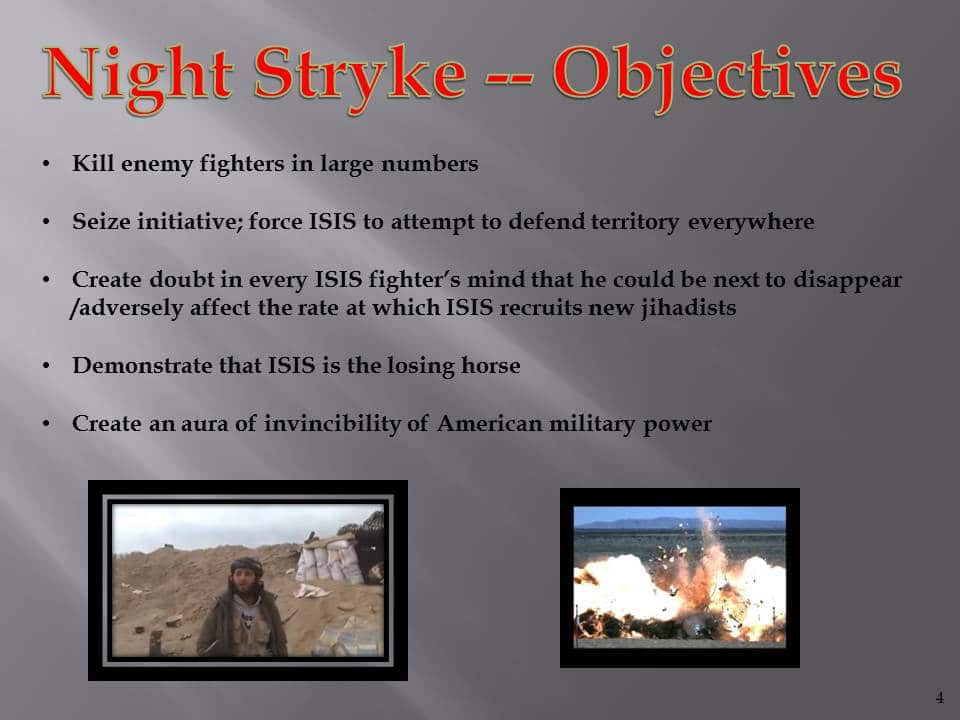
The following slides show a hypothetical framework for operational-level raids against ISIS in Iraq and Syria (although it could also be used in other areas.)  I call it Night Stryke.  For the last ten years, U.S. Special Operations have been conducting raids against high-value targets, of which the attack against Osama bin Laden in Pakistan was most notable.  These attacks, for the most part, were against individuals or small groups of people, perhaps a few dozen at most.  Night Stryke envisions attacking ISIS facilities containing perhaps 100 fighters deeper than most of the attacks so far, and as proficiency increases, so would the prospective size of the target and the size of the attacking force that might ultimately be reinforced battalions or tailored brigades.

Slide1

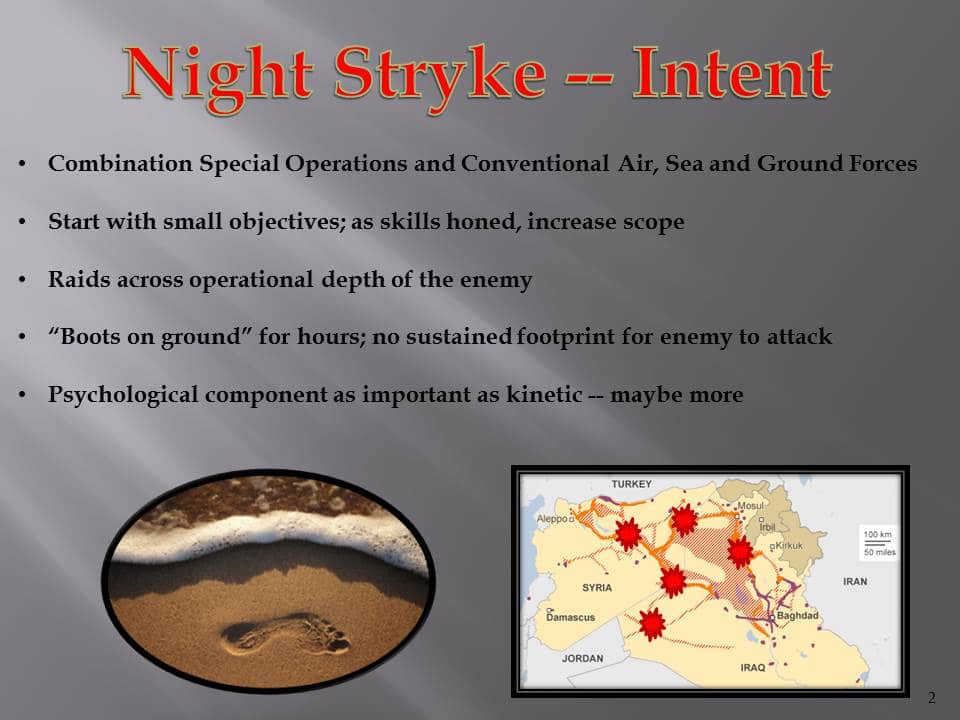
Below are the five facets of the intent of the raids.  Because of their scope, both special and conventional forces would be required.  Because the transportation is by air, attacks could be launched deep behind the forward progress of ISIS forces.  U.S. combatants would be on the ground for only hours (maybe a day at most), leaving no residual footprint to attack.  Finally, the ability to strike anywhere at any time would almost certainly add a disturbing psychological burden on ISIS veteran fighters as well as recruits.

Slide2

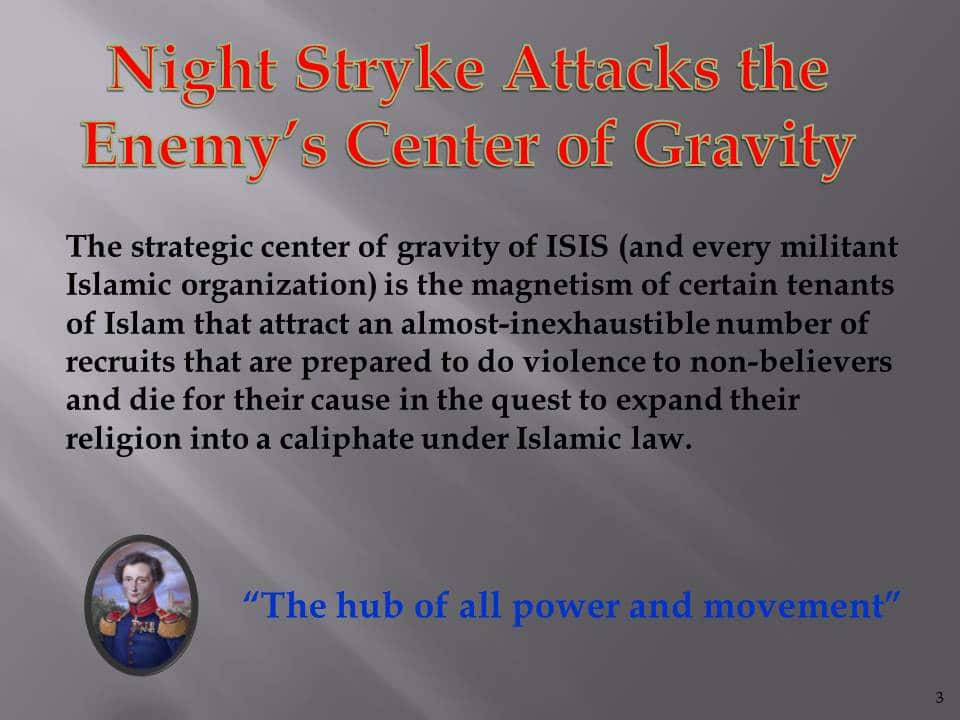
The following is the center of gravity (in my opinion) for ISIS forces.  Every battle plan must attack an enemy’s center of gravity or else it is wasted effort.  You defeat this center of gravity by killing existing fighters and reducing new recruits.  There are non-combat strategies, such as turning a majority of Muslims against the militants and encouraging Islam to conduct its own reformation to eliminate it’s warlike tendencies, but those are strategies for the diplomats; this is a strategy for the warriors.

Slide3

You don’t “take out,” you don’t “degrade,” you kill the enemy in large numbers until you break his will to fight.  It has been that way for millennia and despite a recent political penchant to fight bloodless wars, you have to be ruthless or the enemy will be.  Additionally, striking the enemy throughout the operational depth of the theater causes the defender to try and defend everywhere, and it is a proven military axiom that he who would attempt to defend every where, adequately defends no where.

Slide4

Here is the basic concept.  Intelligence assets locate a remote ISIS site occupied by perhaps several dozen up to several hundred jihadist fighters — perhaps a logistical support area for ISIS convoys carrying oil, or an ISIS-controlled oil field.  Special operations forces locate and secure a forward operating base that includes terrain on which C-17 airlift aircraft or other platforms can land.  As this is 25-75 miles from the target, the ISIS defenders have no idea of an impending attack.

Airlift assets then land combat troops and vehicles, such as Strykers, and this force, perhaps a reinforced battalion, drives to, surrounds and begins to attack the enemy village.  Using direct observation, they pinpoint targets for attack aircraft (fixed wing, helicopters, drones, etc.)  Air platforms must serve as artillery in this fight because adequate ground artillery simply cannot be transported in enough quantity as they (and their ammunition) take up too much haul space.  If the defenders manage a call for help, the same air assets can hammer ISIS columns trying to come to the rescue of their comrades.

Once the ISIS force is eliminated — and the U.S. military simply must change its impotent rules of engagement if it wants to seriously prosecute this war — the force emplaces denial munitions and intelligence sensors to make enemy reoccupation of the facility dangerous.  I would argue that the enemy dead should be removed from the target for “proper” burial elsewhere; such a disappearance would further degrade the moral of ISIS fighters who may have signed up to die for their caliphate, but may not have come to terms with disappearing for their caliphate.  The ground strike force then rapidly returns to their FOB, boards their aircraft and departs for a secure base hundreds of miles away, perhaps even in another country.  Any subsequent media inquiries as to what happened should be met with operational security silence.

Slide5

How much lift we have available must be balanced against world-wide requirements.  Conducting raids to achieve operational gains have been quite successful throughout military history, whether that was Union cavalry raids deep into the Confederacy, or the old Soviet Operational Maneuver Groups that terrorized German rear areas on the Eastern Front in World War II and that kept NATO war planners up at night for forty years in the Cold War.  Time to get inside the enemy’s decision cycle, make him defend everywhere.  And keep ISIS fighters up at night wondering which of their outposts will be the next one to disappear.

It has already worked at the tactical level and by purely special operations forces.  In October 2015, U.S. and Afghan commandos, backed by scores of American airstrikes, attacked an al Qaeda training camp in the southern part of Afghanistan.  The assault, which took place over several days, pounded two training areas — destroying elaborate tunnels and fortifications, and killing as many as 200 fighters.  Because of the proximity to U.S. bases, C-17s were not needed.

It is time to take it up to the next level in size and scope.  It is time to go deep against ISIS and use all special operations and conventional forces at our disposal in even larger raids.

Night Stryke2023-10-08T15:31:58-05:00
Go to Top