French MacLean

About French MacLean

This author has not yet filled in any details.
So far French MacLean has created 279 blog entries.

US Army Executions World War II in Europe and Africa
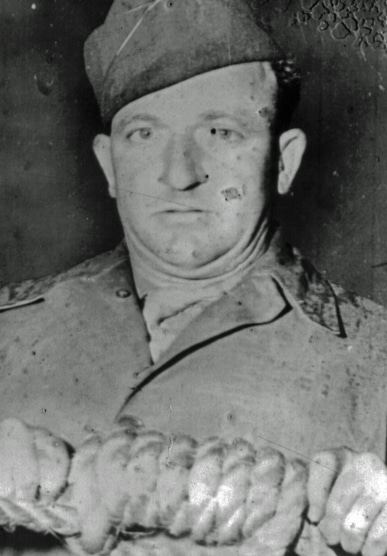
Master Sergeant John C Woods, US Army Hangman


The 96

Last Name

First Name

Date of Death

Location of Execution

Cobb

David

Friday, March 12, 1943

Shepton Mallet Prison, England

Smith

Harold A.

Friday, June 25, 1943

Shepton Mallet Prison, England

Kendrick

James E.

Saturday, July 17, 1943

Oran, Algeria

Pittman

Willie Aron

Monday, August 30, 1943

Termini, Sicily

Stroud

Harvey L.

Monday, August 30, 1943

Termini, Sicily

White

Armstead

Monday, August 30, 1943

Termini, Sicily

White

David

Monday, August 30, 1943

Termini, Sicily

Smith

Charles H.

Monday, September 06, 1943

Oran, Algeria

Davis

Lee A.

Tuesday, December 14, 1943

Shepton Mallet Prison, England

Jones

Edwin P.

Wednesday, January 05, 1944

Oran, Algeria

Waters

John H.

Thursday, February 10, 1944

Shepton Mallet Prison, England

Spears

Charles E.

Wednesday, April 19, 1944

PBS Stockade Number 1, Aversa, Italy

Leatherberry

J.C.

Tuesday, May 16, 1944

Shepton Mallet Prison, England

Harris

Wiley Jr.

Friday, May 26, 1944

Shepton Mallet Prison, England

Miranda

Alex F.

Tuesday, May 30, 1944

Shepton Mallet Prison, England

Donnelly

Robert L.

Wednesday, May 31, 1944

PBS Stockade Number 1, Aversa, Italy

Brinson

Eliga

Friday, August 11, 1944

Shepton Mallet Prison, England

Smith

Willie

Friday, August 11, 1944

Shepton Mallet Prison, England

Whitfield

Clarence

Monday, August 14, 1944

Canisy, France

Watson

Ray

Tuesday, August 29, 1944

PBS Stockade Number 1, Aversa, Italy

Thomas

Madison

Thursday, October 12, 1944

Shepton Mallet Prison, England

Anderson

Roy W.

Wednesday, October 25, 1944

Seine Disciplinary Training Center, Paris, France

Sanders

James B.

Wednesday, October 25, 1944

Seine Disciplinary Training Center, Paris, France

Kluxdal

Paul M.

Tuesday, October 31, 1944

Seine Disciplinary Training Center, Paris, France

Watson

Joseph

Wednesday, November 08, 1944

Seine Disciplinary Training Center, Paris, France

Wimberly

Willie Jr.

Wednesday, November 08, 1944

Seine Disciplinary Training Center, Paris, France

Maxey

Curtis L.

Saturday, November 18, 1944

PBS Stockade Number 1, Aversa, Italy

Pennyfeather

William D.

Saturday, November 18, 1944

Fort Du Roule, Cherbourg, France

Scott

Richard B.

Saturday, November 18, 1944

Fort Du Roule, Cherbourg, France

McGann

Theron W.

Monday, November 20, 1944

St. Lo, Manche, France

Davis

Arthur E.

Wednesday, November 22, 1944

Montours, Ille-et-Vilaine, France

Jordan

Charles H.

Wednesday, November 22, 1944

Montours, Ille-et-Vilaine, France

Hendricks

James E.

Friday, November 24, 1944

Chateau La Vallee, Plumaudan, Cotes-du-Nord, France

Pygate

Benjamin

Tuesday, November 28, 1944

Shepton Mallet Prison, England

Newman

Oscar N.

Wednesday, November 29, 1944

Beaunay, Marne, France

Valentine

Leo Sr.

Wednesday, November 29, 1944

Beaunay, Marne, France

Davis

William E.

Wednesday, December 27, 1944

Guiclan, Finistere, France

Clark

Ernest Lee

Monday, January 08, 1945

Shepton Mallet Prison, England

Guerra

Augustine M.

Monday, January 08, 1945

Shepton Mallet Prison, England

Cooper

John David

Tuesday, January 09, 1945

Lerouville, Meuse, France

Baldwin

Walter J.

Wednesday, January 17, 1945

Beaufay, Sarthe, France

Farrell

Arthur J.

Friday, January 19, 1945

St. Sulpice de, Ille-et-Vilaine, France

Twiggs

James W.

Monday, January 22, 1945

Loire Disciplinary Training Center, Le Mans, France

Holden

Mervin

Tuesday, January 30, 1945

Fort d’Orange, Citadel, Namur, Belgium

Spencer

Elwood J.

Tuesday, January 30, 1945

Fort d’Orange, Citadel, Namur, Belgium

Slovik

Eddie

Wednesday, January 31, 1945

Ste. Marie-Aux-Mines, France

Wilson

J. P.

Friday, February 02, 1945

Lerouville, Meuse, France

Skinner

Robert L.

Saturday, February 10, 1945

Bricquebec, Manche, France

Yancy

Waiters

Saturday, February 10, 1945

Bricquebec, Manche, France

Mack

William

Thursday, February 15, 1945

Plabennec, Finisterre, France

Crews

Otis B.

Wednesday, February 21, 1945

PBS Stockade Number 1, Aversa, Italy

Downes

William C.

Wednesday, February 28, 1945

Etienville, Manche, France

Agee

Amos

Saturday, March 03, 1945

La Saussaye, Commune de Bure, Orne, France

Smith

John C.

Saturday, March 03, 1945

La Saussaye, Commune de Bure, Orne, France

Watson

Frank

Saturday, March 03, 1945

La Saussaye, Commune de Bure, Orne, France

Jones

Cubia

Saturday, March 17, 1945

Shepton Mallet Prison, England

Pearson

Robert L.

Saturday, March 17, 1945

Shepton Mallet Prison, England

Jones

Kinney

Tuesday, March 20, 1945

PBS Stockade Number 1, Aversa, Italy

Mack

John H.

Tuesday, March 20, 1945

PBS Stockade Number 1, Aversa, Italy

Taylor

John W.

Tuesday, March 20, 1945

PBS Stockade Number 1, Aversa, Italy

Burns

Lee A.

Tuesday, March 27, 1945

PBS Stockade Number 1, Aversa, Italy

Grant

General L.

Tuesday, March 27, 1945

PBS Stockade Number 1, Aversa, Italy

Smalls

Abraham

Tuesday, March 27, 1945

PBS Stockade Number 1, Aversa, Italy

Davison

Tommie

Thursday, March 29, 1945

Prise Guinment, Manche, France

Williams

Olin W.

Thursday, March 29, 1945

Le Chene Daniel, Manche, France

Harrison

William Jr.

Saturday, April 07, 1945

Shepton Mallet Prison, England

Hopper

Benjamin F.

Wednesday, April 11, 1945

Loire Disciplinary Training Center, Le Mans, France

Bailey

Milbert

Thursday, April 19, 1945

La Pernelle, Hameau Scipion, Normandy, France

Jones

James L.

Thursday, April 19, 1945

La Pernelle, Hameau Scipion, Normandy, France

Williams

John

Thursday, April 19, 1945

La Pernelle, Hameau Scipion, Normandy, France

McGhee

Shelton Sr.

Friday, May 04, 1945

PBS Stockade Number 1, Aversa, Italy

Smith

George E. Jr.

Tuesday, May 08, 1945

Shepton Mallet Prison, England

Green

George Jr.

Tuesday, May 15, 1945

Loire Disciplinary Training Center, Le Mans, France

Heard

Haze

Monday, May 21, 1945

Mesnil-Clinchamps, Calvados, France

McCarter

William J.

Monday, May 28, 1945

Loire Disciplinary Training Center, Le Mans, France

Norris

Clete O.

Thursday, May 31, 1945

Loire Disciplinary Training Center, Le Mans, France

Rollins

Alvin R.

Thursday, May 31, 1945

Loire Disciplinary Training Center, Le Mans, France

Clay

Matthew Jr.

Monday, June 04, 1945

Fontenay-sur-Mer, Manche, France

Schmiedel

Werner

Monday, June 11, 1945

PBS Stockade Number 1, Aversa, Italy

Martinez

Aniceto

Friday, June 15, 1945

Shepton Mallet Prison, England

Ortiz

Victor

Thursday, June 21, 1945

Loire Disciplinary Training Center, Le Mans, France

Johnson

Willie

Tuesday, June 26, 1945

La Heye Peshnel, France

McMurray

Fred A.

Monday, July 02, 1945

PBS Stockade Number 1, Aversa, Italy

Till

Louis

Monday, July 02, 1945

PBS Stockade Number 1, Aversa, Italy

Jefferies

Charles H.

Thursday, July 05, 1945

PBS Stockade Number 1, Aversa, Italy

Jones

John T.

Thursday, July 05, 1945

PBS Stockade Number 1, Aversa, Italy

Nelson

Henry W.

Thursday, July 05, 1945

PBS Stockade Number 1, Aversa, Italy

Gordon

Tom E.

Tuesday, July 10, 1945

Loire Disciplinary Training Center, Le Mans, France

Wray

Robert

Monday, August 20, 1945

Loire Disciplinary Training Center, Le Mans, France

Philpot

Henry C.

Monday, September 10, 1945

Loire Disciplinary Training Center, Le Mans, France

Robinson

Charles M.

Friday, September 28, 1945

Loire Disciplinary Training Center, Le Mans, France

Mariano

Blake W.

Wednesday, October 10, 1945

Loire Disciplinary Training Center, Le Mans, France

Bennerman

Sydney

Monday, October 15, 1945

Les Milles, France (Delta DTC)

Parker

Woodrow

Monday, October 15, 1945

Les Milles, France (Delta DTC)

Ervin

Charlie Jr.

Friday, October 19, 1945

PBS Stockade Number 1, Aversa, Italy

Spinks

Mansfield

Friday, October 19, 1945

PBS Stockade Number 1, Aversa, Italy

US Army Executions World War II in Europe and Africa2015-09-08T19:49:44-05:00

Kudos for Stalingrad

(November 8, 2013)  Distinguished Stalingrad author Jason Mark, who has written such classics as Island of Fire: The Battle for the Barrikady Gun Factory in Stalingrad, Death of the Leaping Horseman: 24. Panzer-Division in Stalingrad, Into Oblivion: The Story of Pionier-Battalion 305, Angriff: The German Attack on Stalingrad in Photos, and An Artilleryman in Stalingrad, now offers Stalingrad: The Death of the German Sixth Army on the Volga, 1942-1943 for purchase on his website (www.leapinghorseman.com).  Jason writes on his site:

“Leaping Horseman Books gives this two-volume set its highest recommendation. The level of detail is astounding.  For every day of the battle there is map and an account of the actions and casualties of every corps and division in 6. Armee, followed by a closer look at an individual soldier who died on that day.”

Check out his website for this book and for many of Jason’s excellent offerings.

Kudos for Stalingrad2024-07-21T10:33:45-05:00

Grave of Louis Till

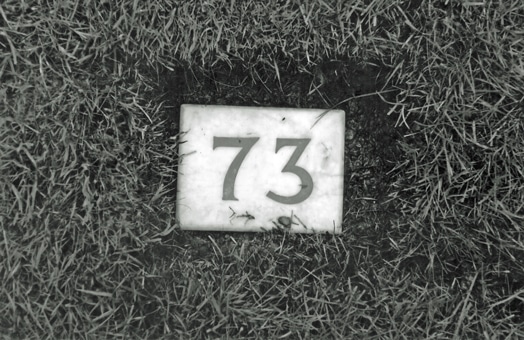
Louis Till was hanged at the stockade at Aversa, Italy on Monday, July 2, 1945.  His body was transferred to the American Military Cemetery at Oise-Aisne in 1949, where he was buried in grave # 73 in the fourth row of the plot known as “the fifth field.”  Till had murdered an Italian woman, raped two other Italian women, assaulted an Italian man and assaulted a U. S. Navy sailor to earn the death sentence.  The Army sent his personal effects home to his estranged wife.  Ten years later, Till’s 14-year-old son Emmett wore his father’s ring, bearing the initials “LT” on a visit from to Chicago to Mississippi.  Three men kidnapped Emmett, tortured and killed him.  His body was so disfigured in the incident that it was difficult for authorities to identify him.  Positive identification was finally made, in part, because of the initials on the ring.  The shocking incident of Emmett Till’s death sparked the Civil Rights movement of the late 1950s.

Grave of Louis Till2015-09-08T19:18:16-05:00

Fifth Field Responses Arriving

(November 6, 2013)  Responses to the publishing of The Fifth Field are starting to arrive.  A Supreme Court Associate Justice, an Army 4-star and Deans of two east coast “Ivy League” Law Schools and one California Law School have written that they each have a copy of the book and look forward to reading it.

Fifth Field Responses Arriving2024-07-21T10:35:31-05:00

The Fifth Field Published

(September 17, 2013) Schiffer Publishing has sent out the author advance copy, which indicates that The Fifth Field has been published and should be available for shipment next month.  The book is fabulous; it came out at 370 pages, with 42 photographs, almost all of which have never been published before.

Five special photographs show moments from the executions of Louis Till, Fred McMurray, Charlie Ervin and Mansfield Spinks at the Peninsular Stockade at Aversa, Italy in 1945.  These unique photographs, which had remained hidden in private hands for 67 years after the war, and unknown to be in existence by the Army, are believed to be the first photos of U.S. Army executions of U.S. personnel since the hanging of the Lincoln Assassination Conspirators in 1865.  The book additionally has five photographs of Army hangman Master Sergeant John C. Woods; we feel certain that you have not seen at least three of them before.

Each of the cases is covered in great detail through trial records, witness statements, investigator notes, review findings and execution reports.  For those historians and legal scholars wishing to do additional research you will find 56 pages of endnotes with specific document citations and the archives in which these documents can be found.  There is an additional appendix that provides over 100 short biographies of detention center personnel, hangmen (such as Thomas and Albert Pierrepoint,) key Judge Advocate General — JAG — officers and commanders from Dwight Eisenhower on down who approved General Court-Martial results.

This is a book about the death penalty.  No matter what you believe your opinion to be on this important subject, you need to read this book before making up your mind for the final time.  The information within these pages has never truly been considered before as we address this significant national issue.  But do not worry.  This is not a legal text; it is written by a regular Army officer, using standard English, not “legalese.”  Having said that, there is a section where a trained lawyer, with over 50 years experience and who has participated in death penalty cases, examines several of these courts-martial and analyzes them from his own perspective.

For historians of the Second World War, this is the first definitive account of every capital case ending in death for an American soldier in Europe and North Africa during the conflict.  For past, present and future Judge Advocate General officers, non-commissioned officers and civilian personnel, this is a history of your Corps during its most significant hour.


The Fifth Field Published2024-07-21T10:36:31-05:00

Warriors fighting the 1874 Yellowstone Expedition

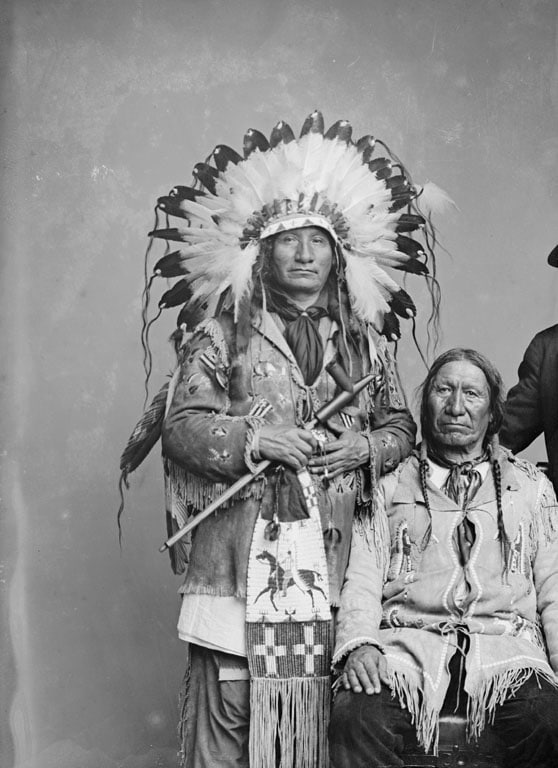
I am trying to determine names of warriors who may have fought there and later at  the LBH in 1876.  So far, I have the following names linked to the 1874  fighting…some are tenuous links, others can pretty accurately be demonstrated,  but I need anyone’s expertise here.  If you can confirm their presence in 1874 or if you know of other warriors that were there, please let me know their names and pertinent information:

Black Twin/Holy Eagle (Wakan) – Bad Face band/Oglala/Lakota

Braided Locks/Wrapped Braids – Northern Cheyenne

Crazy Horse (Tȟašúŋke Witkó) – Hunkpatila band/Oglala/Lakota

Eagle Elk (Wanbdi Herake)† – Oyuhpe band/Oglala/Lakota

Flying By/Struck/Struck Plenty (Keya Heyi) – Minneconjou/Lakota

Gall (Pizí) – Hunkpapa/Lakota

Good Weasel (Hitunkasan Waste)† – Bad Face band/Oglala/Lakota

Gray Earth Tracking/Sounds-the-Ground-When-He-Walks/Noisy Walking (Wahpekute) – Santee/ Lakota

High Bear (Sunka Mato) – Oglala/Lakota

Hump (Etokeah) – Minneconjou/Lakota

Inkpaduta/Red-End-of-Horn (He-inkpa-luta) – Santee/Lakota  

Iron Thunder (Wakiyan Maza) – Minneconjou/Lakota

Kicking Bear (Matȟó Wanáȟtake)† – Oyuhpe band/Oglala/Lakota

Little Killer (Ciqa Wicakte)† – Bad Face band/Oglala/Lakota

Little Wolf/Little Coyote (Ó’kôhómôxháahketa) # – Northern Cheyenne

Looking Horse† – Minneconjou/Lakota

Low Dog (Sunka Kyciyela)† – Oyuhpe band/Oglala/Lakota

Makes Room (Kiyukanpi) – Minneconjou/Lakota

Morning Star (Vóóhéhéve); Lakota name Dull Knife (Tamílapéšni)# – Northern Cheyenne

No Flesh – Oglala/Lakota

Red Hawk (Cetan Luta) – Minneconjou/Lakota

Shell Boy (Pankeska Hoksila)† – Oyuhpe band/Oglala/Lakota

Shell Necklace (Pankeska Napin) – Oglala/Lakota

Shoot the Bear (Mato Kutepi) – Hunkpapa/Lakota

Short Bull (Tȟatȟaŋka Ptecela)† – Bad Face band/Oglala/Lakota

Sitting Bull (Tȟatȟaŋka Iyotȟaŋka) – Hunkpapa/Lakota

Touch the Clouds (Maȟpíya Ičáȟtagya)# – Minneconjou/Lakota

White Earth Tracking (Oyemakasan) – Santee/Lakota

White Twin – Bad Face band/Oglala/Lakota


# inferred from Lakota oral tradition by Donovin A. Sprague Hump

+ inferred from membership in Hokší Hakákta, Last-Born Child Society

Red Hawk


Warriors fighting the 1874 Yellowstone Expedition2015-06-21T22:30:01-05:00

Stalingrad Two-Volume Set Published!

Stalingrad: The Death of the German Sixth Army on the Volga, 1942-1943

Volume 1 – The Bloody Fall

Volume 2 – The Brutal Winter

(August 9, 2013)  The advanced copies of the long-awaited set of books detailing the demise of the German Sixth Army have arrived at the publisher and more should arrive in a few weeks.  You can order a set now.  Bound in a sturdy black case, the two volumes have a total retail price of $69.99.   If you are a historical aficionado of the battle, a “grognard” wargamer, or a military collector of German World War II Stalingrad memorabilia – especially documents , this is a set of books you will pore over time and again in your library.

Stalingrad Two-Volume Set Published!2024-08-20T15:48:17-05:00

Big Horn Gun Ammunition

Brigadier General Lester S. Willson

In 1874, William D. Cameron, a Civil War veteran, assumed command of the Big Horn Gun for the expedition.  He determined that what was needed was shrapnel filled projectiles, although in the Montana Territory there were probably none to be found.  Using his imagination, he discovered several cases of canned oysters in the Tuller, Rich and Willson General Store, owned by Lester S. Willson.  However, Lester S. Willson was no ordinary shopkeeper, not by a long shot.

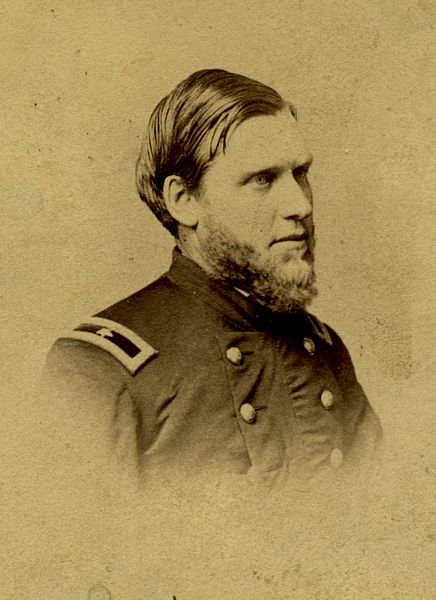
Born in Canton, New York, on June 16, 1839, Willson enlisted in the Union Army in 1861, rising through the ranks in the Sixtieth New York Volunteers to become a colonel by 1865.  During the war, he fought at Antietam, was severely wounded at Chancellorsville, and fought at Lookout Mountain, Atlanta and Savannah.  Colonel Wilson received the surrender Savannah from Mayor Arnold and was the first officer to enter that city at the head of his own regiment.  Two years after the war, he received a brevet promotion to Brigadier General “for gallant and meritorious services under General Sherman, resulting in the fall of Atlanta, Georgia.  After the war, he traveled to Montana, where he became a prominent businessman and politician.  When Cameron told him what he needed, Willson knew just what the doctor ordered.

Cameron and Willson donated the oysters to the general public and filled the empty cans with nails, cut-up horse shoes and scrap iron.  They cut the tops of the cans – which were about eight inches tall – to form metal tabs around the edge and after the original lids were put back into place, crimped the tabs in place.  The pair also found a ream of blue flannel which the cut and sewed into powder charge bags.  Ten inches long and filled with black powder, the charge bags formed a snug fit, when rammed down the muzzle of the cannon, and ensured that the shrapnel canisters would fly a long way.

Big Horn Gun Ammunition2013-08-04T13:24:33-05:00

Wagon Train Laager

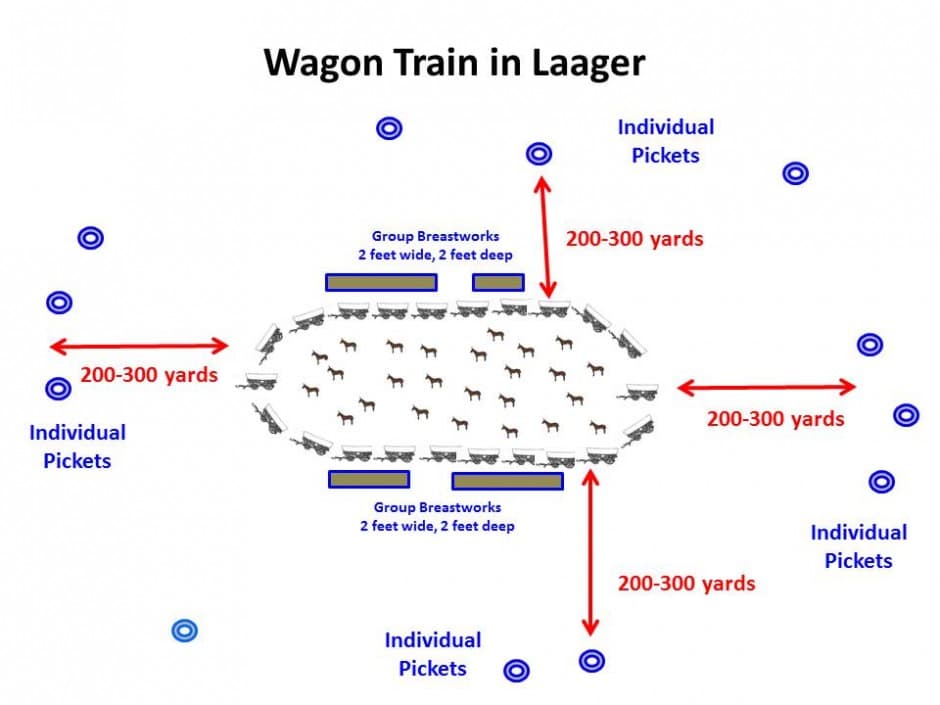
Each afternoon that the wagon train was on the move, Frank Grounds would personally select a campsite on high ground, with no higher terrain in the vicinity from which warriors snipers could fire down into the camp.  Each site was large enough for the men to place all the wagons in an oval and chain them together.  At dusk, the frontiersmen would drive all the livestock into the center of this oval, as if these animals were killed or driven off, disaster would follow.  In many places, this center position for the livestock was in a slight possession, where the animals could be corralled.

When the wagon train was halted for the night, Joe Cook stated that the men would dig a trench about two feet wide and two feet deep on both sides of the corral for breastworks for the protection of the pickets.  They would then dig holes out from two to three hundred yards from the camp.  Each man cut a “head log” from eight to ten inches in diameter and about three feet long.  They would lay these on the embankments and dig small post holes under the logs, so that the Indians could not shoot them in the head, while the frontiersmen were shooting.  Whenever any of these pickets fired a shot, all the others would come into camp as soon as possible.


Wagon Train Laager2013-08-11T12:27:32-05:00

Model 1874 Sharps

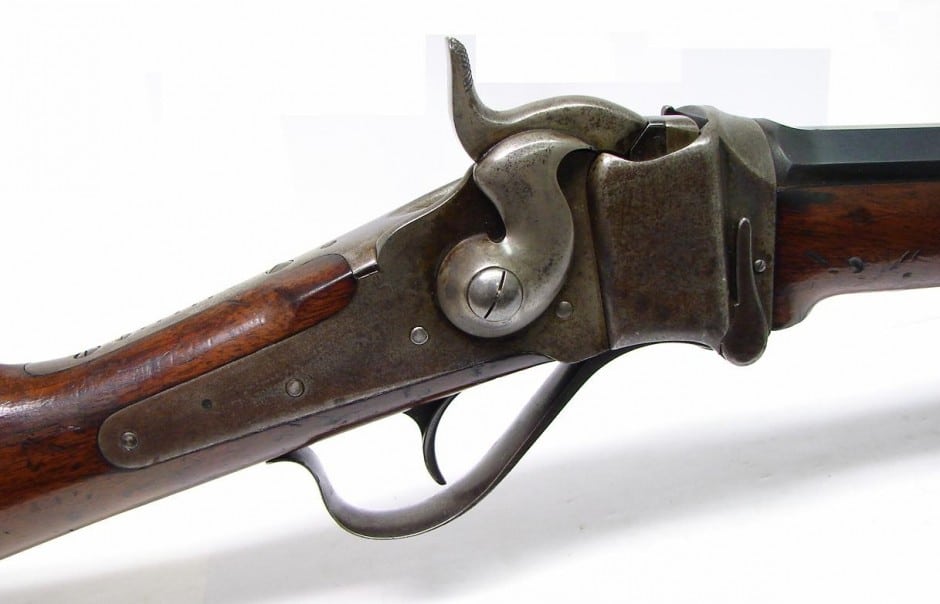
Sharps Model 1874 .50 caliber

At the apex of buffalo hunting (1870-1884,) the Sharps rifle was a favorite among many buffalo hunters, because of its accuracy at long range.  Other rifles were available, such as the Ballard, the Springfield 1873 and the Remington Rolling Block, but the vast majority of frontiersmen who needed a large caliber rifle opted for the Sharps.  The company itself – the Sharps Rifle Manufacturing Company of Hartford, Connecticut – called the rifle, “Old Reliable.”  Buffalo hunters called it, “poison slinger.”  Historians have come to call it, “The gun that shaped American destiny.”   The original Sharps Model 1874 was actually introduced in 1871, but the model number was changed in 1874, when new owners purchased the company.  Reorganized as the Sharps Rifle Company, the business moved to Bridgeport, Connecticut in 1876.  The change may have been intended to show prospective purchasers of Sharps rifles that the company had something new to offer.

What set the Sharps apart from other large-caliber rifles was the ammunition for which it was chambered.  The Sharps action was inherently strong and could withstand chamber pressures that would seriously damage other rifles.  One of the largest of these was the .50-170-700.  The most widely-used caliber for the buffalo hunters probably was the .50-90, basically a lengthened .50-70.  Another extremely popular cartridge was the .44-90, in essence a necked down .50-90 firing a 520 grain bullet.  Some hunters believed that with properly adjusted telescopic sights they could hit anything they aimed at up to 1,000 yards.  At these ranges, some experts believed the .45-125-550 was the ideal load.  As most plains buffalo hunters reloaded their ammunition with varying amounts of black powder to save money, cartridges like the .50-90 were not always referred to as such.  For this reason, Sharps (and ammunition-makers) referred to the standard cartridges by caliber and case length with most Sharps rifles marked as such.  The .50-90, for example, was designated .50-2½.   Many cartridges for Sharps rifles were bottlenecked; ones which were not included the .45-70, the .50-70 and the .50-90.  Before the expedition, Sharps Model 1874 rifles were chambered for the following cartridges and thus it would have been possible for these caliber Sharps to have been present: the .40-90 Bottleneck (2 5/8”) using 265 to 370 grain bullets, .the 44-77 Bottleneck (2 1/4”) with 380 or 405 grain bullets, the .44-90 Sharps Bottleneck (2 5/8”) with 450 or 500 grain bullets, the .50-70 Government (1 3/4”) with 425 to 500 grain bullets and .50-90 Sharps (2 1/2”) firing 425 or 473 grain bullets.  Many .50-70 Government cartridges were found by Don Weibert during his lengthy research on the positions along the expedition’s route.  However, this does not mean the other caliber Sharps Model 1874s were not there, as almost all buffalo hunters reloaded their ammunition and would have saved all their expended cartridges.

Model 1874 Sharps2013-08-24T10:58:02-05:00
Go to Top