French MacLean

About French MacLean

This author has not yet filled in any details.
So far French MacLean has created 278 blog entries.

The Man Who Killed Kennedy: The Case Against LBJ

The assassination of President John F. Kennedy in Dallas, Texas, November 22, 1963. It is the greatest historical mystery in my lifetime; I was eleven years old when it occurred. Who did it? Lee Harvey Oswald, an ex-Marine, married to a Russian woman, and who had lived in Russia for a couple of years? Fidel Castro‘s men? As payback for the Bay of Pigs invasion? The Mafia? They had helped him get elected in 1960, but now his brother, Bobby Kennedy, the US Attorney General, was making life hard on the Cosa Nostra. Jack had fired Allen Dulles, the head of the Central Intelligence Agency (CIA) after the Bay of Pigs. Maybe rogue CIA agents had a hand in the President’s death? Or perhaps the crafty J. Edgar Hoover, longtime boss of the Federal Bureau of Investigation (FBI) played a role? Reportedly Kennedy was going to ease Hoover out of the top FBI job.

Starting in 1963, and continuing to this day, it has become fashionable to disparage everyone who takes an alternative view about an historical event by calling them “A Conspiracy Nut,” or words to that effect. But always remember, just because something is a conspiracy theory doesn’t mean it didn’t actually happen.

If you are one of those that believe everything a network talking head, reading off a teleprompter, tells you, or you blow with the winds of popular thought, or who couldn’t follow a line of florescent dots on the floor leading to the bathroom even if you had rampant diarrhea, you need to know that generally if you can reason, think logically, and can connect dots to solve difficult puzzles, you will generally do better in life than if you are unable, or worse unwilling, to do so.

Because that often translates into being a pawn for those who will take advantage of you. I hope that I have some small ability to “connect the dots” to find out what really happened in history, especially involving significant mysteries. And to show you that you can connect dots as well, and not be anyone’s pawn.

Part of that stems from serving in the Army, during which I was lucky enough to carry out a tour as an Inspector General for the United States Army Europe – often investigating situations that involved complex facts and human behavior, which often follows patterns of great repetition. I also have been flat lucky enough to run into evidence and documents that for whatever reason should have been in the public domain, but were not – the most significant of I was able to turn into a book, The Fifth Field: The Story of the 96 American Soldiers Sentenced to Death and Executed in Europe and North Africa in World War II. If you have followed this website even briefly, you know this work deals with how 96 American soldiers in Europe and North Africa were tried by American General Courts-Martial, convicted by military juries, sentenced to death, executed and buried in an obscure, secret plot at an American military cemetery in France.

While after the book was published, the court-martial records were transferred from a closet to the National Archives, it still appears that one needs a special permission to actually visit the section at the Oise-Aisne American Cemetery and Memorial outside Seringes-et-Nesles, France. If you visited there, and were given permission to see the special field where these men are buried, please email me with that information, and I shall include that.
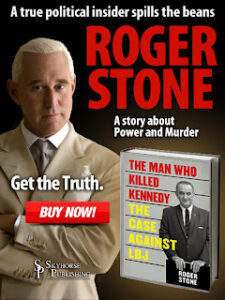
My discovery, however, of what really happened in those significant events pales in comparison to The Man Who Killed Kennedy: The Case Against LBJ, by Roger Stone. Now, let us address the obvious: if you do not like Roger Stone, you may use that bias to disbelieve anything and everything he writes or says. That would be unfortunate for you.

I believe that Stone would never claim to be a professional author, even though he has written six other books, writing has not been his life’s primary work; to make sure he obtained the correct flow, sequencing, level of support documentation and so forth, he enlisted Mike Colapietro, who not only is an excellent writer, but also had practical law enforcement, serving in the Office of the Chief of Staff at the Broward Sheriff’s Office in Fort Lauderdale, Florida.

Meanwhile Stone, the consummate political insider, talked to numerous government officials during his career beginning in 1972. Fascinated by the assassination – as were a lot of people our age (Roger is 70; I am 71 and np, I have never communicated with him) since about 1972, he would always ask guys about it, as he did favors for them, including some really high guys. One “suggested” he not put anything in writing until the 50th anniversary, 2013, when all the folks talking would be dead by then!!!
Stone and Colapietro began this story with a time-tested truism for a murder investigator’s first question, cui bono (who benefits)? In most cases, that may come to be a life insurance policy with the killer is the beneficiary, or killing a spouse to avoid alimony payments, or the killing of a witness by a defendant in another criminal case so that person cannot testify against the perpetrator.

Stone and Colapietro then expanded that to: who had the most to gain from Kennedy’s death at this moment in 1963?

Then they asked themselves: who had the most to lose by a second John F. Kennedy presidential term beginning in 1965? The answers soon became obvious, and maybe you already know the following:
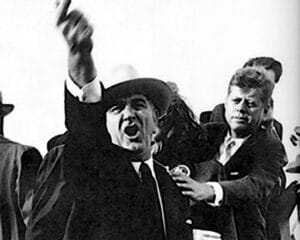
  • Vice-President Lyndon Johnson wanted to become President, hopefully running in 1968 after John Kennedy’s second term in office. However, Johnson became convinced that Kennedy was planning to dump him from the ticket prior to the election in 1964. Even worse, law enforcement was closing in on Johnson for several instances of graft and bribery – charges that might go public and lead to an indictment before the end of 1963. After Johnson assumed the Presidency, the charges went away. Cui bono?
  • President Kennedy had informed the chief of the Federal Bureau of Investigation (FBI), J. Edgar Hoover, that he would face mandatory retirement from that position in 1965. Hoover joined the Justice Department in 1917 and was named director of the Department’s Bureau of Investigation in 1924, which later became the FBI. Hoover wanted to remain in the job, but was not supported in that request by his immediate boss, Robert F. Kennedy, the U.S. Attorney General and the President’s younger brother. Vice-President Johnson supported Hoover as FBI chief, and Hoover remained in that position until 1972. Cui bono?
  • The Mafia provided valuable support at the request to Joe Kennedy, John F. Kennedy’s father, especially in West Virginia and Illinois, in the 1960 election of Kennedy. However, after assuming office, not only did President Kennedy not turn a blind eye toward Mafia activities, he appointed his younger brother Robert as U.S. Attorney General. Bobby was an existential enemy of the Mafia. In 1962 alone, Robert Kennedy touted the fact that prosecutions for racketeering by his Organized Crime Section in the Justice Department rose by 300 percent above 1961 and convictions of organized criminals grew by 350 percent. Kennedy left the Attorney General position just ten months after his brother was killed. Cui bono?

Using that as a guidepost, the authors concluded that in the end, Vice-President Lyndon Johnson leveraged his personal connections in Texas; and from nationwide organized crime (the Mafia,) and from the federal government – specifically the FBI and the CIA – to form a conspiracy to murder President John F. Kennedy on November 22, 1963. And he used his influence to personally select the subsequent Warren Commission that would cover up the participants in that crime.

But you don’t have to just take my word for it. Here are some other comments. Because far too many people pre-judge a person’s opinion based on political leanings, race, creed, religion or other characteristic, I have omitted names and used only titles.

“A consummate political insider, Roger Stone views the JFK assassination through the prism of a murder investigator’s first question, cui bono (who benefits)? Stone’s shocking answer is that the primary suspect has been hiding in plain sight for 50 years: LBJ. A riveting account.” – Former U.S. Attorney

“Any serious student of politics or history should read Roger Stone’s stunning new book The Man Who Killed Kennedy.” – Judge

“Roger Stone nails LBJ for JFK murder!” – Journalist, Filmmaker

“Stone’s book will change American history forever!” – Historian
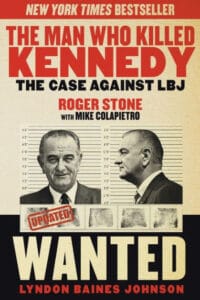
Do yourself a favor that will change your viewpoint, because the assassination of President Kennedy in 1963 fundamentally changed this country, and not for the better. Read The Man Who Killed Kennedy: The Case Against LBJ.

The Man Who Killed Kennedy: The Case Against LBJ2024-07-04T09:59:29-05:00

Kudos for The Fifth Field

U.S. Supreme Court

Kudos for The Fifth Field are still coming in and are reaffirming that this book will not only shed a light on one of the last great mysteries of World War II, but might also serve as a focal point for a much-needed national discussion on the future of the death penalty.  The author has received wonderful letters from FOUR United States Supreme Court Justices, the deans of Harvard Law, Columbia Law and Stanford Law Schools, the Chairman of the Joint Chiefs of Staff and the Judge Advocate General of the United States Army.  One of the Supreme Court Justices noted, “I was not familiar with the events recounted in the book.”  One of the deans wrote, “It will reward serious reading,” while another dean added, “I look forward …to learning more about the soldiers you have so tirelessly researched and bring to life their stories.”  On the military side, one General Officer wrote, “This will be very thought provoking,” while a second General Officer opined, “Your demonstrated commitment to the individual lives of Soldiers and the military justice system is truly commendable.”

Perhaps the most poignant comment was made by the child of one of the men who did not come home from the war — one of the 96 described in The Fifth Field.  The descendant, now in old age, said, “God bless you, Colonel; for 65 years, no one would tell me where my father is buried.”

Kudos for The Fifth Field2021-12-31T21:23:08-06:00

Tom Ward

Tom Ward and the author

Thomas J. Ward, 96, of New Cumberland, passed away on Sunday, December 19, 2021 in his residence with his loving family at his side.  He was retired from the New Cumberland Army Depot, and was formerly a Foreman with Miller & Norford Construction Contractors, Lemoyne.  Tom attended Christian Life Assembly, Camp Hill; was a member of the Order of the Purple Heart; and a master craftsman working with wood, stone and small engines.  Anyone who needed anything fixed would bring it to Tom.  He was born in Lemoyne, the son of the late John C. and Edith (Grey) Ward.  He was also preceded in death by a daughter and a son, Jonette Ward and Jeffrey Martin and siblings, Elva, Romaine, Vance, Tennis, Robert, Margaret, Richard and Preston.  Tom is survived by his loving wife of more than 43 years, Winifred (Shuff) Ward; children, Thomas J. Ward, Jr. of Coudersport, Barbara Fontaine of Athol, ID, John Ward of Camp Hill, Christine McGee of Harrisburg and Karen Martin of Mechanicsburg; grandchildren, Allen, Thomas, Tony, John, Lainie, Cameron, Jeremy, Joshua, Heather and Taylor; thirteen great grandchildren; and two great-great grandchildren.  Funeral services were held on Monday, December 27, 2021 in Parthemore Funeral Home & Cremation Services, New Cumberland.

Born on June 9, 1925 at Harrisburg, Pennsylvania, Tom enlisted on September 2, 1943 and was assigned to Company I, 23rd Infantry Regiment in the Second U.S. Infantry Division.  An Infantry sergeant, Tom was decorated with four Purple Hearts, the Bronze Star, the Combat Infantryman Badge and numerous campaign awards, having served in Normandy, Northern France, Rhineland and Ardennes-Alsace.  After his fourth wound, he departed the 2nd Infantry Division in 1945 and reported to the Loire Disciplinary Training Center, where he served as the supply sergeant.

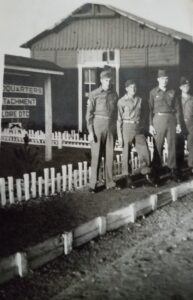
Loire Disciplinary Training Center.  Sergeant Tom Ward on left

At Le Mans, Tom was John Woods, the U.S. Army hangman in Europe, closest friend, often going downtown in the evening for a beer together, although they never discussed at the pubs what happened inside the center.  He recalled that the day before each execution, Woods would walk to the supply room to get the rope and black hood that would be used in the upcoming event; a new rope was used for each hanging, although Woods would use each black hood several times.  He also recalled that many of the executions occurred just before noon, when many of the men in the stockade – not involved in the execution – were standing in line outside the mess hall for lunch, and when the trap door opened, the motion was so violent and unique that the loud noise could be heard throughout the DTC and this distinctive sound spoiled many a man’s appetite.  Later, Master Sergeant Woods even asked Tom to be his assistant hangman, but the quiet sergeant from Pennsylvania had seen enough death and declined.

Without his help, American Hangman could not have been written.  But in addition to his historical knowledge, Tom was one of the most decent human beings I have ever known.  A tough soldier, he unleashed hell on a German defensive position after one of his men had been killed in the ongoing combat.  And later, Tom once knocked out a fellow American sergeant with one punch for calling him a REMF.  But Tom also had compassion for everyone he met in life who had things harder than he did.  During the war, Thomas Ward broke regulations and gave army blankets to refugees he met on his supply runs from Le Mans to Le Havre during the cold winter of 1944-45, and seventy years after the war ended, he was still hopeful that they had survived and went on to have a happy life.

Congratulations Sergeant Ward.  Yours was a life well-lived.

Tom Ward2023-06-20T14:16:37-05:00

Is Dr. Anthony Fauci Really a Dr. Josef Mengele?

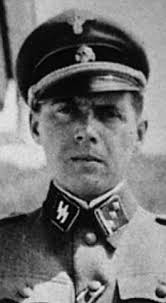
Josef Mengele

A new book The Real Anthony Fauci: Bill Gates, Big Pharma, and the Global War on Democracy and Public Health by Robert F. Kennedy, Jr., says that Dr. Anthony Fauci is America’s Joseph Mengele for what he did to poor orphan minority kids in the 1980s, specifically that Dr. Fauci tested harsh chemotherapy drugs on orphan children in order to determine their potential for AIDS treatments; that he got control of foster homes in 7 states that served as sources for the youngsters; that these children were denied guardians and any kind of legal protector; that most of the children did not have HIV/AIDS, they were just used as guinea pigs to see if they could survive the harsh drug regimen; and that as a result, at least 85 children died as part of these experiments.

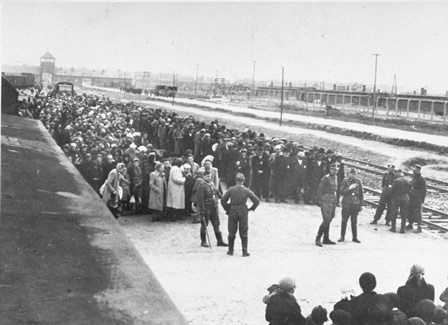
The selection ramp at Auschwitz. The column on the left will head directly to the gas chambers. The column on the right will enter the camp and be worked to death. Mengele is the officer in the right-center.  He is looking for twins.

I do not know how true these allegations are, but I do know who Dr. Josef Mengele was and you should know about him also or this comparison means nothing.

Josef Mengele, also known as the “Angel of Death,” was a German Waffen-SS captain and physician during World War II.  For decades after the war, and continuing today in some circles, the fable has remained alive that the SS personnel who served in the concentration camps were somehow different from their honorable brethren, who fought at the frontline in the Waffen-SS, in units.  Thus, those in the combat units have earned a pass from some historians, who believed the former Waffen-SS General Paul Hausser story Soldaten wie andere auch (Soldiers Like Any Other.)

But Hausser was incorrect.  As The Camp Men demonstrates with irrefutable proof from the official SS personnel file for each officer, almost half of the concentration camp officers also served in Waffen-SS combat divisions.  Mengele served in the 5th Waffen-SS Division in Russia.

But the real shocker is how many physicians, like Mengele, in Germany supported the Nazi Party.  More than 38,000 doctors, nearly half of all the physicians in Germany, joined the Nazi Party.  None were forced to join; they saw it as an opportunity to advance their careers.  At least 316 doctors served in the concentration camps, as well as at least 57 dentists.

Before the war, Mengele had received doctorates in anthropology and medicine, and began a career as a researcher.  He joined the Nazi Party in 1937 and the SS in 1938.  In early 1943, assigned to the Auschwitz concentration camp, he saw the opportunity to conduct genetic research on human subjects.  His experiments focused primarily on twins, with no regard for their health or safety; many died.  Mengele later served at the Gross-Rosen concentration camp.  But don’t take it from me; here are a few quotes from The Angel of Death:

“It would not be humanitarian to send a child to the ovens without permitting the mother to be there to witness the child’s death.”  The ovens here refer to the crematoria at Auschwitz, where the dead were burned.

“I don’t have anything to hide.  Terrible things happened at Auschwitz, and I did my best to help.  One could not do everything.  There were terrible disasters there.  I could only save so many.  I never killed anyone or hurt anyone.”

“Scientists have always been able to study twins after they have been born together.  But only in the Third Reich can Science examine twins who have died together.”

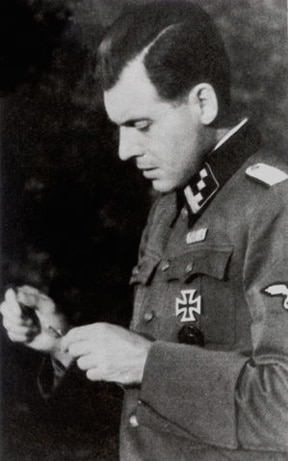
SS-Hauptsturmführer Josef Mengele; Mengele served in the 5th Waffen-SS Division Wiking, winning the Iron Cross 1st Class, before transferring to Auschwitz and subsequently Gross-Rosen.  

Josef Mengele drowned in 1979 after suffering a stroke while swimming off the coast of Bertioga, Brazil and was buried under the false name of Wolfgang Gerhard.  Dozens of Nazi doctors did not escape justice and were hanged after the war for Crimes Against Humanity.  You can read about some of them in American Hangman.

Maybe Anthony Fauci had nothing to do with the orphans and AIDS experiments on children at all; if so, Mr. Kennedy owes him an immense apology.  Maybe Dr. Fauci did play a role, but believed that their suffering, and the death of many of them, would do a greater good for mankind as a whole.  But as the International Military Tribunal (IMT) in Nuremberg, Germany showed after the war, their are limits to medical experimentation covered in Crimes Against Humanity.  And if the allegations in Kennedy’s book are accurate, in my opinion those experiments were clearly in in violation of that category.

If you have any actual information about the New York experiments, you can stand up for these kids — who could not stand up for themselves.  If you are reluctant to contact Children’s Health Defense at 1227 North Peachtree Pkwy, Suite 202 in Peachtree City, GA 30269 at 202-618-2477, contact this website and I’ll forward your evidence.

Is Dr. Anthony Fauci Really a Dr. Josef Mengele?2022-02-16T18:27:21-06:00

Versatility – A Jack for All Trades


Glock 40 MOS 10mm

You’ve heard the phrase: “A Jack of All Trades, Master of None.”  However, in the world of firearms, versatility – the quality of being useful for or easily adapted to various tasks, styles, and fields of endeavor – often means that a single weapon can be a Master for All Situations.

It may not be a function of caliber, nor the capacity of the magazine, or the optic on top.  It is a function of ammunition.  And there are two weapons that stand head and shoulders above most others in this respect – the shotgun and the 10mm pistol.

The ubiquitous shotgun; it has been around for over 400 years and is often called a scattergun, or historically as a fowling piece.  Calibers have been many; for this discussion we will stick with the always-popular 12 gauge and what a variety of ammunition we have!

Birdshot is probably the most common type of 12-gauge shotgun load, comes in at least 12 sizes, and allows hunters to target small to medium game (or skeet and trap shooters to hit clay “birds.”)  For birdshot, the larger the number, the smaller the pellet (size 8 has more, but smaller diameters of pellets than a size 6, for example.)

But wait!  Many 12 gauge shotguns now come with the ability to fire three chamber sizes – 2.75-inch, 3-inch and 3.5-inch.  The longer the size, the more pellets there are inside, plus the velocity is often higher which extends the range a bit.  Then there is BB shot that comes in at least 3 sizes, used for larger birds like ducks and geese.

Leaving the search for aerial targets and going to the ground gets us into buckshot and there are five rounds in that (#4 buck, #1 buck, 0 buck, 00 buck and 000 buck.)  For example, #00 buckshot throws eight or nine balls (some magnum loads contain 12-15 balls!), #1 buckshot holds 16 and #4 buckshot has 24 to 27 balls.  Then there are the “tweeners” like T-shot that I put in the category of hunting large waterfowl like geese.

Finally are the slugs that are used for deer, and really any other large game; some hunting guides even opine that a 12-gauge slug is the best antidote for an attacking bear.  Almost every 12 gauge round can kill a man; there are tragic hunting accidents every year involving even very small size birdshot rounds.  For the intentional dispatching of an armed criminal trying to kill you, buckshot is probably the best way to go.  The versatility comes in when analyzing the environment of the shot.  Inside the home or outside?  Is the attacker on foot on in a motor vehicle?  Behind a barrier?  What is the expected distance between you and your would-be killer?  More than one assailant?  There will be an optimum-size shotgun round for every situation.  That is what gives it the ultimate in versatility.

But you know that already.  The second weapon with immense versatility is the 10mm pistol – which you may not be familiar with – and it also centers on the large variety of ammunition available for it.  MidwayUSA lists sixty-six 10mm rounds (unfortunately most have to be back-ordered, but that’s a different issue.)  By my count, 10mm rounds range in weight from 100 grains to 220 grains, which is close to a .380 auto round weight on the small end, to a .44 Magnum on the large end.

10mm rounds come in various bullet shapes, each with a different purpose in mind: hard-cast-flat-nose and lead-round-nose for large game hunting; jacketed-hollow-point, full-metal-jacket, “fluted”; bonded-jacketed-hollow-point; and fragmenting-hollow-point; full-metal-jacket-flat-nose.

Just a few 10mm options

But it is velocity that provides even more versatility.  Muzzle velocities range from about 1030 feet-per-second to 1875 feet-per-second.  There is one type of round, an RBCD Performance Plus out of San Antonio, that advertises a 10mm 77 grain total-fragmenting-soft-point that comes out of the muzzle at 2420 feet-per-second, but I can’t find any for sale, which might be a good thing.

What versatility does velocity provide you?  Well, in potentially crowded urban areas, in a self-defense situation where you don’t want your bullet going through your erstwhile killer – and subsequently killing an innocent person, you can do your homework and pick the round type and velocity to ensure it doesn’t “over-penetrate.”  In rural areas, you can use heavier and faster rounds, because you are not concerned with bystanders, but are concerned about dangerous four-legged animals, as well as two-legged ones.

I wish I had figured out the versatility of a 10mm years ago.  I have been firing a 12-gauge shotgun for four decades and a 10mm (with 18 different ammunition types and speeds) for just four weeks.  But who says an old dog can’t learn new tricks?

Versatility – A Jack for All Trades2023-10-08T14:50:18-05:00

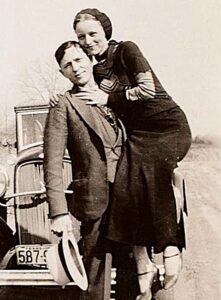
Bonnie and Clyde

Lately I have been reading a lot about the days of Bonnie and Clyde, and what we can learn from back then.

The country was a mess.  This “Public Enemy Era” spanned from 1931 through 1935, during the depths of the Great Depression that crushed the economy, and the Dust Bowl – a period of severe dust storms that greatly damaged the agricultural output of the American and Canadian prairies – that caused mass hunger.  10,000 banks went out of business, taking $3 billion of depositor’s life savings with them, leaving account holders penniless.  With 80% unemployment in some areas, those unfortunates would remain destitute, unless they took matters into their own hands, and some turned to crime.

Today, rampant government spending is out of control, leading to increasing inflation that steals buying power.  We have some wealthy people, but as I travel around the U.S. – my latest trek a 1,081-mile drive from Decatur, Illinois to Worcester, Massachusetts, I’ve seen a lot of help-wanted signs; undocumented illegal aliens working for far less than minimum wage; obscenely-high gas prices; rental cars that have over 40,000 miles on them and are in constant need of maintenance yet sometimes costing $100 a day; and infrastructure problems (read bad roads, run-down bridges) that will remain poor, because these big spending programs always end up targeting pet projects of the rich and voting constituencies of the lazy.

For the first two years – 1931-1933 – it was a stupid era.  Prohibition in the United States, beginning in 1920 and ending in 1933, was a nationwide constitutional ban on the production, importation, transportation, and sale of alcoholic beverages.  While some people regarded the attack on alcohol as a noble cause, an overwhelming number did not, and Prohibition single-handedly caused tens of millions of Americans to view the law as lacking any moral obligation to follow it; they became felons overnight and they felt no remorse at doing so.  This disregard for law and order became a cancer in society; one day citizens refused to follow Prohibition; the next they began to support organized crime to provide the illegal goods they wanted.

Today’s version of Prohibition aims at stripping Americans of their right to bear arms, another stupid idea.  Were it to get close to happening, tens of millions of us – maybe more – will become felons overnight, because we will not comply, and organized crime will start a shipping tsunami of firearms into the country, just like it did booze.

Bonnie and Clyde

For the first years of Bonnie and Clyde, most regular folks hated the police and were on the side of the renegades, even though they were a far cry from modern day Robin Hoods portrayed in movies.  It was only after several murders of police, including one trooper on his first day of the job and another scheduled to be married in three weeks before he was cut down by Clyde in cold blood – the bride-to-be wore her wedding dress to her fiancée’s funeral – that attitudes toward the police changed.

Today, police are equally disrespected – mostly in big cities from Portland to Atlanta.  I’d like to think that Champaign Police Department Officer Chris Oberheim didn’t die in vain, and it seems like many folks in central Illinois know that too, but this country is in a whole lot of trouble right now with its negative view of the “thin blue line”.  What doesn’t help is when senior FBI personnel start helping one political party against another, though.  That convinces many people that the law is unfairly enforced; today citizens may just mistrust high-level leaders of the FBI.  Tomorrow that mistrust, which often evolves to not cooperating with career FBI agents, can lead to the bureau being ineffective.  Lots of folks knew where Bonnie and Clyde were hiding out and operating, yet the stayed quiet.

There’s another takeaway from Bonnie and Clyde.  In our era of concealed carry and the ubiquitous Glock-this and Glock-that, maybe we put too much emphasis on pistolcraft – not that we shouldn’t be proficient with these weapons.  But Clyde Barrow didn’t terrorize people with a pistol; he did it with Browning Automatic Rifles, BARs, whose .30-06 rounds would go through one side of a car and out the other, killing anyone in between.  And when the law finally did catch-up with Bonnie and Clyde one morning on a Louisiana dusty dirt road, what put finis to the two marauders were a couple of Remington Model 8s, a BAR, a Colt Monitor, and some Remington Model 11 semi-automatic 12-gauge “riot guns”.

Texas Ranger Frank Hamer (played by Kevin Costner in the excellent movie The Highway Men), who led the posse that nailed Bonnie and Clyde, was a big believer in the old phrase, “A handgun is for fighting your way to a long gun you shouldn’t have left behind.”  While he was an excellent shot with a .45 Colt and a .44 Special, mostly it was a long gun that got Frank’s bacon out of the fire.  We might want to consider that today.  And the FBI may want to consider the public’s perception of them.


Bonnie and Clyde2023-10-08T14:47:35-05:00

The Battle of Algiers

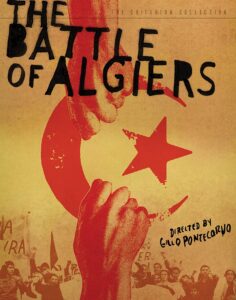
Movie poster for The Battle of Algiers

What if I were to tell you that a movie, with a budget of only $800,000 made in 1966, was so profound that it significantly influenced revolutionaries throughout the world like Ernesto “Che” Guevara, Fidel Castro, the Black Panthers (as a training manual for violent uprising,) the Provisional Irish Republic Army, and the Jammu Kashmir Liberation Front to such an extent that the 120-minute film was banned in France for five years, that the Israeli government banned the film until 1975 for fear that the emerging Palestine Liberation Organization would use it as an inspiration for attacks on Israelis, but on the other hand, the movie was even screened at the Pentagon by the Directorate for Special Operations and Low-Intensity Conflict in 2003/2004 with respect to the insurgency in Iraq?

Director Gillo Pontecorvo’s The Battle of Algiers is a guidebook for how to build a secret organization (in this case the Algerian independence movement, National Liberation Front, Front de Libération Nationale, FLN) as the most lethal means of striking civilian targets, which often leads to a successful revolution.  Pontecorvo greatly details the methods of indoctrination in these groups – techniques that if most Chicago street gangs do not acknowledge where they learned them, they should be sued for plagiarism.

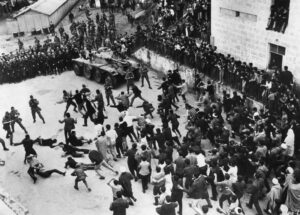
Scene from The Battle of Algiers

The classic film is based on events that actually took place during the 1954-1962 Algerian struggle for independence from France.  The action follows a small group of FLN rebels, and their charismatic leader, Ali La Pointe, who use all means at their disposal to induce the French to leave their country.  A petty criminal serving a two-year prison sentence in Algeria in 1954, Ali was recruited in the infamous Barberousse prison (US prisons are also hotbeds for terrorist recruitment) by FLN militants, and became one of the FLN’s most trusted lieutenants in Algiers, the capital of Algeria – until French security forces killed him there on October 8, 1957 in the Casbah.

The FLN, created in March 1954, merged numerous, separate opposing factions of the nationalist movement so as to better wage war against French colonial presence in Algeria.  A modern comparison would be if some overarching anarchist group in the U.S. formed and was able to subsequently unify: Antifa, Communist Party USA, Earth Liberation Front, La Raza, Youth Liberation Front, and so forth.  Add in American cells of the Palestine Liberation Organization, Hamas, Hezbollah – all anti-American with a bloody history.  And what if they also united with basic criminal street gangs, super gangs like Los Zetas, Aryan Brotherhood, and Mara Salvatrucha (MS-13), and elements of Central and South American drug cartels?

You might say, “That couldn’t happen here,” but the FLN started small, initially with just twenty-two members, and an “exterior delegation” in Cairo, Egypt to solicit foreign support, including funding (there were George Soros’ back then too.)  They divided Algeria into five zones and placed a colonel in charge of each.  Their primary mission was to provide “ideological awareness” backed by violence, so for each Algerian killed by the security forces, a French citizen would be killed by the FLN.  The FLN organized as a cell-based pyramid structure, so a member only knew a maximum number of three other insurgents.  Thus, if an insurgent were captured and tortured, he could only give up a few fellow terrorists.  You’ll also see in the movie that the FLN followed the motto of “snitches get stitches.”

Through the use of terror, the FLN was able to persuade regular, non-violent Algerians, that not only were they NOT French, but that France had to renege on its core values.  Sound familiar?  Today’s anti-American anarchists stress hyphenated-Americans instead of American unity.  They spit on American core values such as the Constitution and Bill of Rights, and trample American history at every turn – attempting to stifle freedom of speech that defends American values.  Disagree with the mob and Facebook, Twitter or other social-disease media platforms ban you.  The Naródnyy komissariát vnútrennikh del never had it so good.

The novel, The Centurions, written in 1960 by Jean Larteguy, presents much of the same subject.  The story, centering on some French Legionnaires, begins with the fall of the French fortress Dien Bien Phu in Vietnam, and subsequently leads to Algeria.  It’s central theme is: how is war waged in a new global order, when the “age of heroics is over.”  I first read this book at West Point for a Revolutionary Warfare elective, and if you like to curl up with a good read, here’s one.

You can get both the movie and the book online.  Organize a Watch Party!  You can – and should – see this movie because America’s enemies, both foreign and domestic, almost certainly already have.

The Battle of Algiers2022-09-12T07:30:54-05:00

Don’t Look Up — Satellites

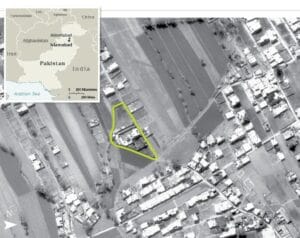
Osama bin Laden’s Compound — A Good Use of Satellites

What if a few men had a billion eyes?  What would we call them?  Well, we’re about to find out.  In one of my old jobs, I used to surf the net and pick out 20 articles per week, copy them, put them in seventeen binders and provide those binders to the Secretary of the Department of Homeland Security, the Administrator of the Transportation Security Administration, the Commandant of the United States Coast Guard and fourteen other folks around Washington, DC.  All the articles were “open source” – unclassified – the key was knowing where to look for pieces of information they needed to make decisions, and probably wouldn’t get this info from their subordinates who processed data in traditional Washington ways, where sometimes the boss doesn’t find out what’s going on.  Think The Swamp.

Nowadays, sometimes I go geeky and surf around like the good old days, and I found this article from the Massachusetts Institute of Technology (MIT) which is full of geeky folks researching geeky things.  Its about satellites; how there are at least 768 commercial ones up there zooming around; how US federal regulations limit images taken by commercial satellites to a resolution of 25 centimeters, about the length of a man’s shoe; how their orbits pass over every place on Earth sometimes 15 times a day.  Then it discussed a company called BlackSky Global that promises to have their satellites fly over most major cities up to 70 times a day.  As MIT says: “That might not be enough to track an individual’s every move, but it would show what times of day someone’s car is typically in the driveway.”

Now go to Google Earth Pro.  Type in your address, and voila you’ll see your house from above.  But what is really interesting is it has a feature that shows you the overhead views beginning many years ago.  Look to see how the resolution gets better over time; what you couldn’t see in 1995, you sure can see in 2010; and what you couldn’t see in 2010, you can see now; that evolution isn’t going to stop.

That’s just commercial; military and national intelligence satellites (ours and other nations) have resolutions and linked recognition software that make commercial satellites seem tame.  In an open source, US astronomer Clifford Stoll,  former systems administrator at Lawrence Berkeley National Laboratory, remarked that a really good satellite platform, orbiting at 155 miles up, could have a resolution of “a couple of inches.  Not quite good enough to recognize a face.”  But that disclosure was several years ago, and technology always marches on.

That’s just satellites.  What about ground imaging cameras?  Well, it is estimated that there are already 1 Billion ground imaging cameras on Earth.  That is one camera for every eight people.  You may well have some in your home security system, or the trail cameras you set up to spot that Boone and Crockett Club record buck you just “know” is out there.

However the revolution in electronic security is not in image producers; it is in image interpreters – the artificial intelligence (AI) systems that are lashed up with the cameras.  Let’s look at the Chinese, pardon the pun.  The security system for the city of Guiyang, about 3,500,000 people, has the image of every single resident.  The cameras read faces, and the AI estimates age, gender, and ethnicity and matches every face with an ID card that every Chinese must have.  Chinese engineer Yin Jun says that the system can “trace all your movements back one week in time.  We can match your face with your car…match you with your relatives and the people you’re in touch with.”

A recent exercise, monitored by the BBC, took seven minutes for the system to identify and surround a new visitor to Guiyang.  But it gets better.  It appears that AI now includes Emotion Recognition to track traits such as facial muscle movements, vocal tone, and body movements in order to infer a person’s feelings.  Perhaps that could be used to incarcerate a person before they commit a crime – arresting them for their thoughts!

A few months ago, we attended a wedding held outside.  During the service, I heard this buzzing above my head.  Thinking it was a hornet, I looked up, but it was a small drone taking photos of the wedding, mine included.  Then I wondered: what else is up there, so high no one would ever know it is there, or its purpose?  Was it also looking at me?  Does it know my name?  Does it know what I am thinking?

Don’t Look Up — Satellites2023-10-08T14:55:16-05:00

Dare to Dream

Luis Ángel Colón World Record Cuatro

Sometimes you run across a person with a special talent, and even if you don’t know that individual well, you want success for them.  Such is the case of Luis Ángel Colón, whom I met while researching for maybe a new novel on Puerto Rico.  He lives in a modern, wooden house high on a hill outside Barranquitas.  He built the house because that is what Luis does – build incredible things with wood.  Not only houses, he may be the best craftsman currently constructing the Cuatro Puertorriqueño.  Known as a Cuatro for short, it is Puerto Rico’s most popular melodic instrument, and is played in both secular and religious music.  It sort of looks like a violin, or more accurately a violin-shaped guitar.  The Cuatro originally had four double-strings (hence cuatro for four) but at the end of the nineteenth century a fifth was added as its popularity rose on the island.

Cuatro by Luis Ángel Colón

Luis’ Cuatros are wonderful instruments, but don’t take my word for it.  The Metropolitan Museum of Art in New York City [Accession Number: 2003.216.1] has one of Luis’ creations.  An artist himself, Luis is proud when Cuatro-players around the island tell him what a great instrument he has made for them.

But like almost all artists, Luis dreams big and at first that meant creating the world’s largest-playable Cuatros, which he did several years ago.  The result was a 30 foot-long, Puerto Rican cuatro that weighs 1.4 tons.  Up to 15 people can fit inside Luis’ giant instrument, which you can actually tune, and play its chords with a giant guitar pick.  However, Luis is not finished.  In addition to building a second house, crafting exquisite  regular-size Cuatros, and also producing the Guiro Clásico Puertorriqueño, Guiro, a hollowed out gourd, about sixteen inches long, that has been dried and treated so that it can be used as an instrument.  Notches are carved on one side of the gourd, and the musician uses a stick or tines to create various raspy tones.  Johnny Pacheco was a famous Guiro player.  Janis Joplin was a famous singer who tried to play the Guiro, they key word being tried.

Guiro by Luis Ángel Colón

“Do It Again,” by Steely Dan, has prominent Guiro tones, as does “Don’t You Worry ‘Bout a Thing,” by Stevie Wonder.  If you are a Santana fan, you know all about this instrument; “I Ain’t Got Nobody That I Can Depend On” is a great one, as is “Guajira.”

Luis’ Dream — A Cuatro Museum and Restaurant

However, Luis has his sights set higher…much higher.  He has begun to organize architectural drawings of an entire building shaped as a Cuatro, possibly solar powered, here in Puerto Rico, that might be able to serve as a combination Cuatro museum and restaurant (with dishes named after parts of the Cuatro) in a unique fusion of music and food.  Luis Colón just might have an idea for you.

Create your own dream by checking out Luis’s dreams.  If you are a guitar player, broaden your horizons with your own Cuatro, maybe even one built by him.  Play along with Stevie, or Carlos and Jorge Santana with your own Guiro – you can get a good one for a very reasonable price.

Or just maybe you want to spend some quality time down in the Caribbean and want to open a one-of-a-kind restaurant.

Dare to Dream2021-09-04T16:54:41-05:00

West Point, Class of 1974

1974

Admitted

1967 – 1

1968 – 1

1969 – 12

1970 – 819

Graduated – 833

Time at West Point:

Upon arriving at West Point in the summer of 1970, the question every new cadet tacitly pondered was whether they would serve in Vietnam at some point during their time in service.

The country was deeply divided over the war, and nationwide anti-war demonstrations came to a tragic climax with the killing of four and wounding of nine other unarmed Kent State University students by the Ohio National Guard on May 4, 1970.

Despite division over the war, 1377 new cadets entered the Academy out of over 6,000 applicants. On his way to perform for the troops in Vietnam, Bob Hope and his entourage, stopped at West Point on December 15, 1970, for a special Christmas show. And on May 29, 1971, President Nixon visited the academy with a message of assurance that no graduates from the Class of 1974 would be deployed to Vietnam, although this news was a little late for our future First Captain Jack Pattison, who had fought on Hamburger Hill in that conflict as an enlisted man, before attending the Prep School and subsequently West Point.

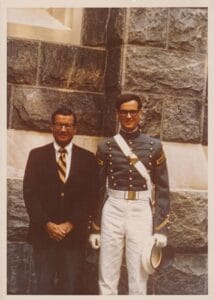
French & Dad at Graduation; it had been a LONG way from Summer School for Chemistry

While most of the class members were on summer leave, a few to summer school, army orientation training, or airborne school, a federal appeals court ruled on June 30, 1972, that mandatory chapel was unconstitutional, thus ending a years-long tradition at West Point. On July 1, 1973, President Nixon fulfilled a re-election promise by ending the draft and ushering in the era of an all-volunteer army.

Distinguished scholars among the 833 graduates included Andrew Green and Thomas Downar recognized with the Hertz Foundation Award; Dwight Helton and Willis Marti awarded the National Science Foundation Graduate Research Fellowship; Kerry Pierce awarded the Rhodes Scholarship; and Michael Reopel awarded a White House Fellowship. French was not distinguished, attending summer school in 1972 for Chemistry, and graduating number 724 of 833!

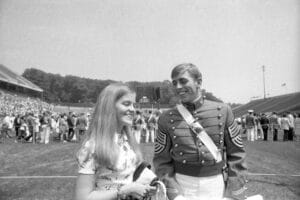
Dave Petraeus and fiancée at graduation

Environment upon Graduation:

The Class of 1974 entered a peacetime Army divided between draftees and enlistees who served in Vietnam, and volunteers who had no combat experience. Graduates were immediately challenged to address post-war issues such as low morale, racial tensions, and unit readiness as the Army transitioned from the Vietnam war to more defensive missions in Western Europe and South Korea. The class also provided exemplary leadership regarding the integration and development of women into combat support units. Missions and training broadened to include desert warfare in anticipation of conflicts in the Middle East.

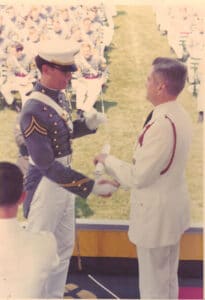
Receiving Diploma from Superintendent, Lieutenant General William Knowlton. The “Supe” was probably more surprised than I was!

Career Highlights:

Members of the Class of 1974 served in assignments around the globe and played a key role in providing frontline combat leadership in the Gulf War (1990-1991), the Iraq War (2003-2011), and the Global War on Terror. No members of the Class were killed in action or died while in captivity. Twenty-five members of the Class became General Officers, including four 4-star generals, three 3-star, eleven 2-star, and seven 1-star. Completing over forty years of active service, GEN Martin “Marty” Dempsey served as the 18th Chairman of the Joint Chiefs of Staff from October 1, 2011, until September 25, 2015. GEN Keith Alexander, serving in the United States Army for nearly forty years, served as director of the National Security Agency, chief of the Central Security Service, and commander of the United States Cyber Command. GEN David “Dave” Petraeus served as Director of the Central Intelligence Agency after serving 37 years in the United States Army. Highlighting nearly thirty-seven years of service in the United States Army, GEN Walter “Skip” Sharp last served as the Commander, United Nations Command, Commander, ROK-US Combined Forces Command and Commander, U.S. Forces Korea. After retiring as a Colonel, Matthew S. “Matt” Klimow (who was Keith Alexander’s roommate at West Point) went into the U.S. State Department; his career there culminated as the U.S. Ambassador to Turkmenistan. Keith Alexander, Marty Dempsey, and Skip Sharp were each awarded the USMA Distinguished Graduate Award in 2016, 2017, and 2019, respectively.

West Point, Class of 19742023-06-21T15:00:52-05:00
Go to Top